
Category Archives: Animal Activism
David Sheldrick Wildlife Trust Orphan’s Supporting the Global March for Elephants and Rhinos October 3rd and 4th 2015
Filed under Animal Activism
Media Release – Vancouver Global March for Elephants and Rhinos 2015
For Immediate Release
Vancouver BC Joins 130 Cities in Global March for Elephants and Rhinos
There is a war on wildlife. In many parts of Africa elephants and rhinos are killed with AK47’s, or more painfully with poison arrows. Their faces are removed (often when they’re still alive) for their tusks and horns. An elephant is killed every 15 minutes. In the past decade elephant populations across Central Africa have declined by 60%. All species of rhinos face the same dire future. The Western Black rhino is extinct. There is one carefully guarded northern white male rhino left in the world. When he dies, they too will be extinct. A rhino is killed every 8 hours.
In Asia,the Asian elephant is even more endangered with fewer than 30,000 remaining. Many of these are forced into lives of grueling hardship in the tourism trekking and illegal logging industries,
Canada still allows legal trade of ivory in Canada if the ivory is deemed to be pre-1989 (something which is extremely difficult to prove). This loophole here and in other nations allows new ivory to continue to be illegally traded.
This year 10 Canadian cities are taking part in the annual Global March for Elephants and Rhinos to help raise awareness of the many challenges these animals face. With a large Asian population particularly in Vancouver, Canadians are in a unique position to engage the Pacific Rim (particularly Hong Kong) on issues related to the ivory trade.
On September 30th NDP MLA Port Coquitlam read a private members bill in the BC Legislature: https://www.youtube.com/watch?v=o-eqW8Algms
Date: October 3rd, 2015
Where: Vancouver Public Library – North Plaza
Time: 12:00 to 2:00 pm
Speakers:
- Jake Wall (UBC graduate) Save the Elephants
- Rosemary Conder – BC SPCA – tourism and Asian elephants
- Hedy Fry – MP Vancouver Centre
Background Information
If the slaughter continues, these species that have roamed the world for millions of years will be extinct within a generation (15 years). Global action is needed today.
The ivory and rhino horn trade are driven by the growth of the Chinese and Vietnamese middle class. The US is the second largest market for ivory. Terror groups such as El Shabaab and Boko Haraam, wreak devastation on communities, and elephant and rhino populations in order to fund terror activities. It is estimated that 70% of ivory makes its way to China to be used to make trinkets such as bracelets and amulets for worship. Rhino horn (made of keratin the same as human hair and nails) is believed to have magical properties and is used in Chinese medicine.
Raising awareness of the challenges facing wildlife is critical. Without our voice, these and other iconic keystone species will be eradicated. Please tell their story, and tell the story of the global march…a group of everyday people from around the world who are united in the belief that the slaughter of these emotionally intelligent and complex animals must be stopped.
About the Global March:
The Global March for Elephants and Rhinos, is a global grassroots advocacy movement whose aim is to end the poaching crisis against elephants, rhinos and other endangered species. Last year in 137 cities, 50,000 marched. It was the largest wildlife march to ever take place and was endorsed by the UN Sustainable Development, Jane Goodall and the David Sheldrick Wildlfe Trust amongst others.
The goals of the Global March are to:
- Reclassify Elephants and Rhinos under the Convention on International Trade on Endangered Species of Wild Flora and Fauna (CITES) as ‘endangered’.
- To stop the legalization of the rhino horn trade in South Africa
- To stop the hunting of elephants, rhinos, pangolins, lions (etc.)
- Apply pressure on the government of China to implement its May 2015 announced intention of “eventually” ceasing the ivory trade: to close the ivory carving factories and the State-sponsored ivory retail shops
- To stop the trade of baby elephants and other wildlife for life in captivity.
The Global March for Elephants and Rhinos in Vancouver is organized and hosted by Elephanatics a Westcoast elephant advocacy group.
To join the global march click here or here.
Additional Resources:
Wildaid – Elephant poaching infographic video
Global March for Elephants and Rhinos
Elephant Summit Background Information
Support for the March:

For more information:
Tessa Vanderkop
Filed under Animal Activism
Today is World Elephant Day
Every day at the DSWT is World Elephant Day! But today is a chance for us to celebrate the species together and let the world know why they need our protection.
Watch as our Nursery Head Keeper, Edwin Lusichi, takes you on a journey in his life – caring for orphaned baby elephants in Nairobi, today and everyday.
For more ways to help today, please visit: http://www.dswt.org/WED
Filed under Animal Activism
Save Elephants from Cruelty in 30 Seconds
Watching elephants perform may look like family fun, but for elephants and other wild animals, the experience is anything but! Join us and the voice of this video, Selma Blair, at http://www.whatelephantslike.com/ in the fight against performing cruelty; and keep animals where they belong, in the wild.
Filed under Animal Activism
Global March for Elephants and Rhinos – Vancouver 2015
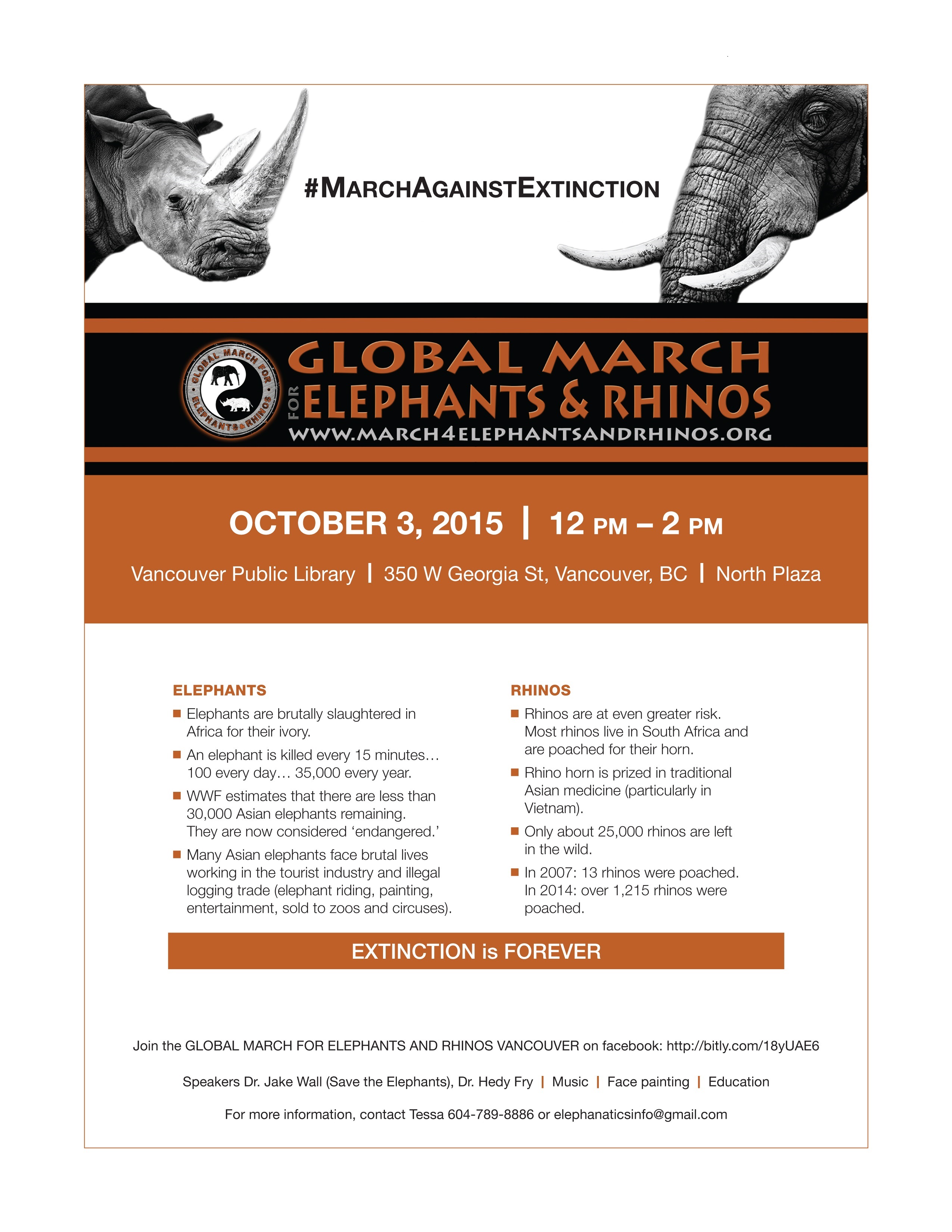
Please help spread the word and join the Global March for Elephants and Rhinos march. Last year 137 cities marched (50,000 people). This year already over 100 cities around the world are organizing to end the poaching war against elephants and rhinos. Find your city here.Learn more about the Global March here.
Oct 3rd – Vancouver Public Library – 350 West Georgia – North Plaza
12:00 pm to 2:00 pm
#March4ElesandRhinos #MarchAgainstExtinction
Find us at: @condofire @elephanaticsbc
Speakers:
Dr. Jake Wall (Save the Elephants)
Dr. Hedy Fry – MP Vancouver Centre
Rosemary Conder – BC SPCA
Vancouver will once again be taking part in the Global March for Elephants and Rhinos to draw attention to the crisis facing these two species and to call for an end to the ivory and rhino horn trade that is pushing them rapidly towards extinction.
The poaching of elephants and rhinos has reached unprecedented heights in recent years as the demand for ivory and rhino horn has soared in China and other mainly Asian markets. The ivory trade is also fueling terrorist groups, transnational criminal gangs, and armed militias that are destabilizing African countries as well as posing serious threats to international security.
An elephant is brutally killed every 15 minutes – that’s around 100 every day, and at least 35,000 every year. With so few numbers left (some estimates put the figure as low as 250,000 for the entire continent), and with such a slow reproductive cycle, the outlook is looking tragically bleak for elephants. If we don’t take action now to stop this massacre, it will be too late to save them. They will vanish forever – in about 10 years.
A rhino is poached every 11 hours with an estimated 24,000 left in the world. Over 1,000 rhinos were poached last year alone, compared to 13 in 2007. If the rate of killing continues to rise, rhinos too face extinction within the decade.
Here is a short informational video about the ivory trade:
https://www.youtube.com/watch?v=HfooocokOr4&list=UULXXG0683FswkRlXk4CTjFQ
Please help spread the word – Join the Vancouver march here! Join the march on FB.
Hosted by elephanatics BC – a Vancouver based elephant advocacy group
Filed under Animal Activism
My nieces – wildlife advocates – collaborators – A plea to save Elephants and Rhinos from extinction
My nieces Ella and Taya have been great supporters of the Global March for Elephants and Rhinos. This post is a collaboration between the two. Ella wrote it in French and Taya translated, edited and added her editorial precision to the content of this piece.It’s a work of real collaboration.
My niece Ella she has been raising money, marching, and giving talks to her friends and fellow students about the crisis facing Africa’s wildlife. This was written after the girls visit with their family to Kenya this spring. I think they’re remarkable, Ella is 12 and Taya is 14.


I’m asking you, if you love elephants, rhinos, and animals, are you doing everything you can to help them?
My family and I recently went on a trip to Africa. While we were there, we saw some amazing animals and surreal sights. Some of the most fascinating animals we saw were the eight elephant herds, and about twenty five rhinos. I find that it’s crazy to think that, at the rate we are going all the rhinos will be extinct in ten to fifteen years and that in fifteen to twenty years,elephants will be gone as well.
One of the worst things about this crisis is that we, as humans, are in full control over this problem and over their lives. The two main reasons for their disappearance are ivory poaching and habitat loss. Ivory poaching is what I find really astounding. How could people want to kill these beautiful animals for their tusks? And then they use them as a symbol of their high social status, or to show people they have money. There is still hope of ending ivory poaching, but with every day that goes by, their chance for survival decreases.
Did you know that in the last one hundred years 95% of the elephant population was killed for their ivory tusks? And up to one-hundred elephants are killed each day. There are now only about 400,000 African elephants left in the world. Maybe this number seems big to you, but it is actually quite small compared to how it used to be. In 1940, only 75 years ago, there were about 3 to 5 million African elephants in the world.

Rhinos are in greater danger because many they are rapidly approaching extinction. The main reason that rhinos are killed is because their horns are believed, by many countries, to be a cure for disease. For example, in Vietnam, they believe that rhino horn can cure cancer. However, their horns are made of the same thing as our nails, so biting our nails and using rhino horn for the treatment of diseases has virtually the same effect.
For some time, it appeared that there was hope for rhinos. In 2002, the number of rhinos killed was 25 which was surprisingly small. It kept improving each year, and in 2006, ten rhinos were killed. In 2007, that number went down to seven and it looked like an end to rhino poaching was approaching. However, since 2008, the numbers of rhinos killed each year has dramatically increased. The years following “the big improvement”, the situation has gotten worse, to the point where, in 2014, we have killed 1215 rhinos for their horns.
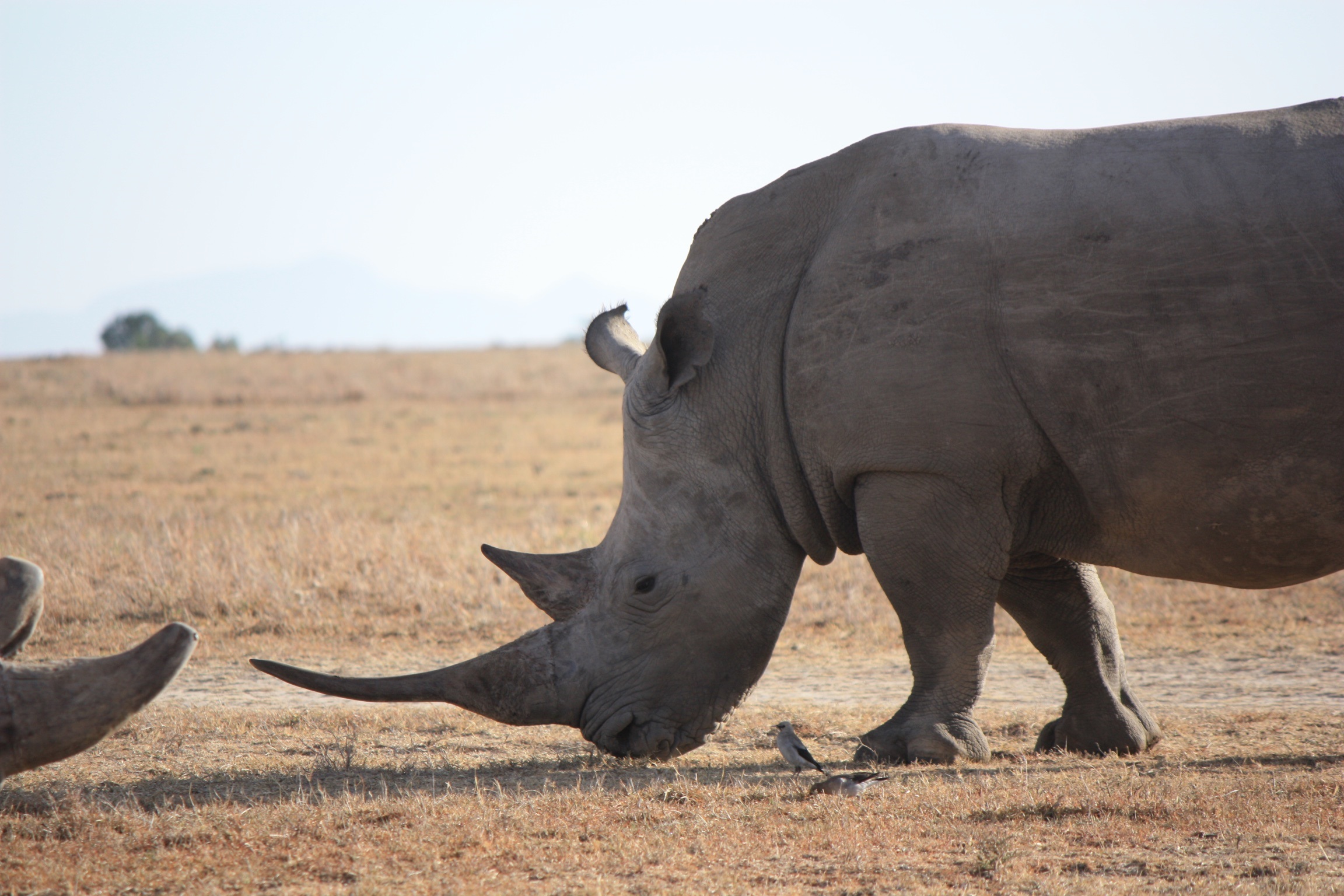
In Africa, we were able to see one of the five remaining northern white rhinos left in the world. We also saw the southern white rhino, and the black rhino. There is no hope for the northern white rhino, as they have tried to introduce them to each other and they will not mate, They will be officially extinct as soon as the five remaining rhinos die. The black rhinos are also endangered, with 4,848 rhinos left. The southern white rhino came back from an extremely close call with extinction and they now have a status of a near threatened species with 20,000 southern white rhinos left.
The poachers, even though they are the ones who kill elephants and rhinos for their ivory, are not the main reason for the approaching extinction of these animals. The big problem we face is the consumers. Their demand for ivory is the main reason these species are endangered, as without the high demand, the poachers have no reason to kill the elephants and rhinos.
In order to stop ivory poaching, we need to stop the consumers from killing elephants and rhinos. In a poll back in 2007, the IFAW (International Fund for Animal Welfare) discovered that 70% of Chinese, the largest consumers of ivory, weren’t aware that they had to kill elephants in order to get their ivory. The word for ivory, in Chinese, means elephant teeth, so many thought getting ivory was similar to pulling out somebody’s teeth. As a result of this poll a campaign was launched to raise awareness of ivory poaching. The campaign was simple enough- a poster explaining ivory poaching and how they got the ivory. The advertisement done by JC Decaux, the biggest outdoor advertising company in the world,
The posters had an outstanding impact on people’s views of ivory. Another survey, this one in 2013, showed that the posters had been seen by 75% of the population, and the number of high-risk consumers of ivory (those who are most likely to buy objects made of ivory) had been cut in half. There is still hope for the animals if we act fast, and are committed to making a difference.
When my family and I were in Africa, we saw many incredible things, but there is one memory in particular that stands out. While we were driving through the plains, we came across a group of about eight rhinos. We drove a bit closer, and we saw eight piles of rocks there, under a tree. There was a sign beside the tree. 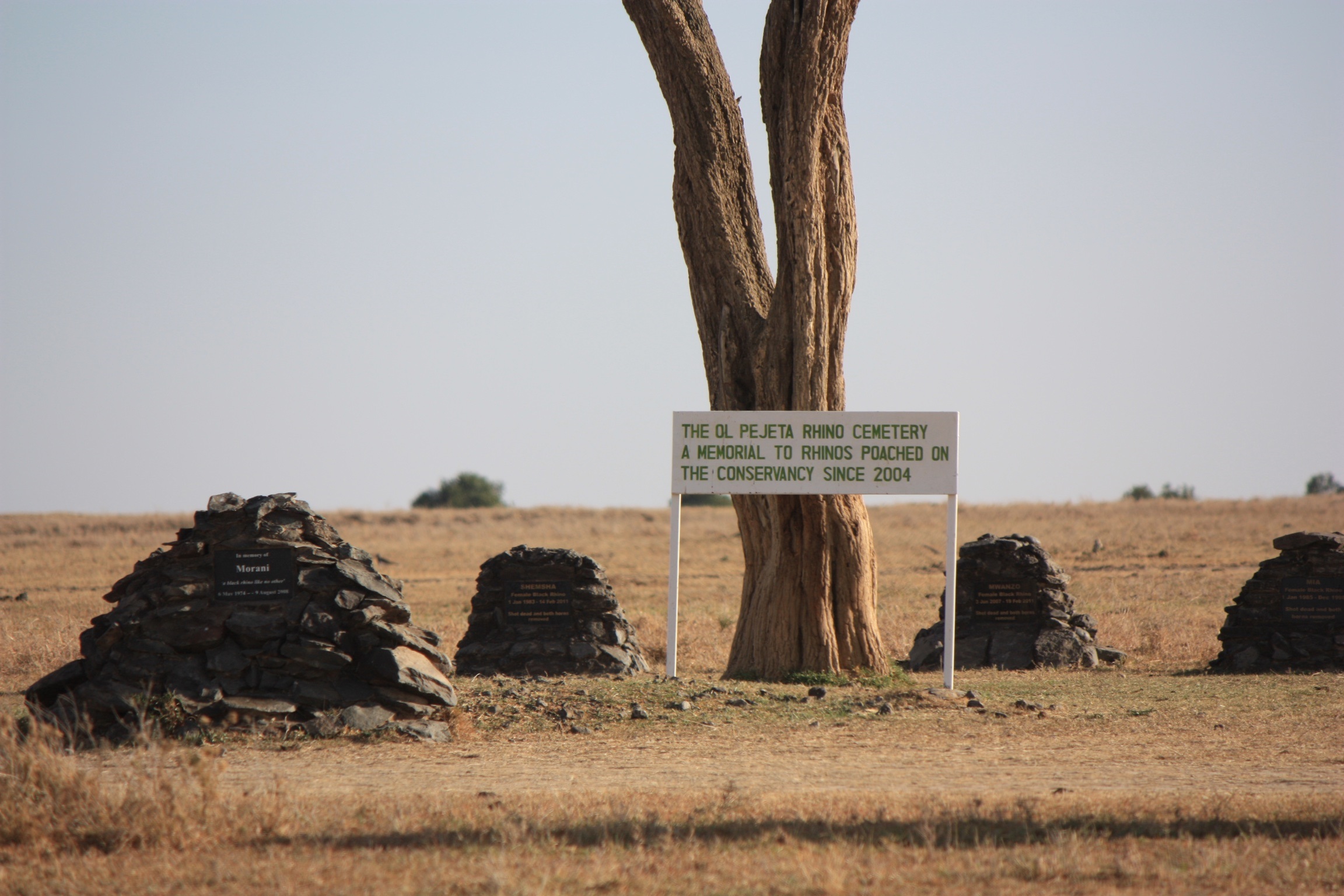 That was when you fully realize the effect of poaching on these animals. The rhinos had a life before they were poached; they had a family, friends, and others who would remember them, much like us.
Their death affected the other rhinos, just like the death of someone we knew and cared about would affect us for the rest of our life.
We need to save these animals while we can. There is still hope, but how long will it last?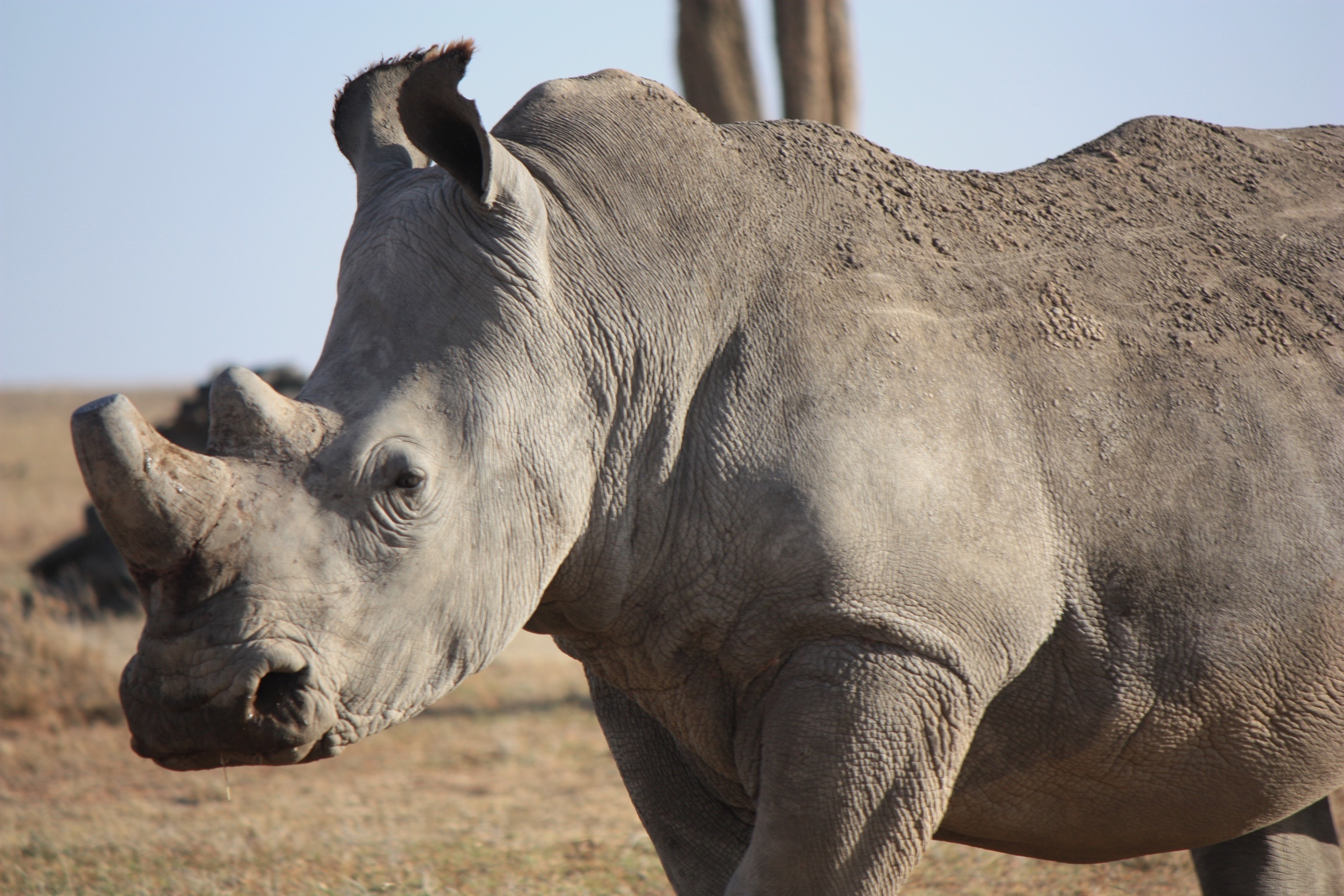

Filed under Animal Activism
Global March for Elephants and Rhinos Oct 3 & 4 2015
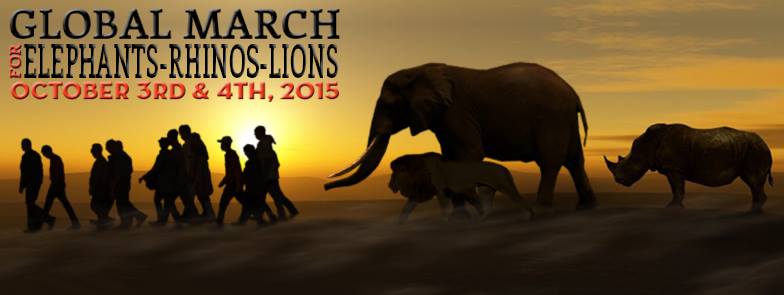
I am an animal lover and an advocate for species at risk. I have pledged to raise awareness and funds for elephants and rhinos. I advocate on behalf of elephants and rhinos who are poached, elephants who are enslaved in entertainment or in horrific conditions as working animals. (Asian Tourism, circus elephants).
I am also the co-organizer for the second annual Global March for Elephants and Rhinos on October 3rd, 2015. I am grateful for my co-organizers Fran, Andrea, Jake and Christine at Elephanatics who have jumped into the madness with me along with the growing number of incredible volunteers, not the least of whom is Dave who works tirelessly for animals.
Please find a city near you or better yet organize a march in your city! Without our help, without a global effort these two species face extinction.
- Last year 137 cities, and over 50,000 people marched. Let’s double it this year. Let’s scream and yell and make our voices heard. Let’s change this outcome for these animals. Come on. Let’s do it.
- Last year 35,000 elephants were poached, 100 a day, or 1 every 15 minutes. There is a growing market for ivory from China with the US being the second biggest market for ivory. Political instability and terror groups use ivory to fund their activities. Ivory is now worth more than gold. Poaching is wreaking havoc on elephant populations and on communities.
- Less than 100 years ago 5 million elephants roamed Africa. 90 percent of them are now gone. On our watch.
- Rhino horn is prized for its “medicinal” properties. The Whole World is Just Left with 27,431 Rhinos. Updated stats can be found here.
- Ivory funds terrorism. Elephants and rhinos cannot fight the war that is being waged against them without our/your help.
You can find out more about the Global March for Elephants and Rhinos right here. Find your city and join the many others who are lending their time and effort to speak up on their behalf.
Here are some pictures from last year’s march.
The Vancouver march will be held at the Vancouver Public Library North Plaza from 12:00 pm to 2:00 om Saturday October 3rd. Join us. These guys need all the help they can get. We’ll have music, speakers, face painters, cool stuff for sale and of course we’ll sign petitions and make as much noise as we can so the world hears and responds to this urgent issue.
Join the Vancouver march here.
Find your city here.
Photos



Filed under Animal Activism
Ted X – Steven Wise on why chimps should have legal person status – Non Human Rights Project
This is an extraordinary Ted X presentation by Steven Wise founder of the Non Human Rights Project on why chimpanzees ‘(and other animals) legal status needs to be changed from ‘thing’ to ‘person’. For those of us who love animals and understand their voicelessness at the hands of people, this talk represents a sweeping step in the right direction.
“Chimpanzees are people too, you know. Ok, not exactly. But lawyer Steven Wise has spent the last 30 years working to change these animals’ status from “things” to “persons.” It’s not a matter of legal semantics; as he describes in this fascinating talk, recognizing that animals like chimps have extraordinary cognitive capabilities and rethinking the way we treat them — legally — is no less than a moral duty.”
Filed under Animal Activism
The Circus is In Town – Stop Animal Performances

The Circus Is Coming to Your Town
Find out why a growing number of countries, cities and provinces have banned Wild Animal Circuses
Increasingly, countries, provinces and cities all over the world are banning the use of animals, both domestic and wild, for entertainment purposes such as circuses. Bolivia deserves a round of applause for being the first country to implement such a ban. Other countries following suite include Australia, Austria, Peru, Greece, Hawaii, Cyprus, Paraguay, Columbia, the Netherlands and Slovenia.
The following Canadian provinces and cities have also banned circuses with wild animal performances: multiple cities in British Columbia, Newfoundland, Nova Scotia and one or two cities each in Ontario and Quebec. Find a complete listing here.
While there are still some communities that still welcome these live animal shows the truth behind animal entertainment is extremely distressing.
For instance, a performing elephant is broken as a baby after being torn from its family. To “break” an elephant, it is tied, beaten and starved for weeks until it becomes fearful and submissive of humans. Once it is broken, its continued submission is ensured through the ever present bull hook and stun guns.
The circus coming to your town, owned and run by Tarzan Zerbini has a lengthy list of USDA (US Department of Agriculture) violations. Please find this list here.
Elephants live the same life span as humans and are known to be one of the most intelligent and emotionally complex animals in the world. They share important family bonds, grieve and are playful. They are very much like humans except they’re elephants,
Travel for long periods of time in extremely small quarters and forcing wild animals to perform even under the best of conditions is inherently cruel. Cirque du Soleil is an example of 21st century circus that entertains without abuse and the enslavement of wild animals.
Even without these violations the life of performing wild animals is based on terror and submission and includes social isolation, forcing animals to perform unnatural tricks which it’s body is not designed to do (elephants have no need to ride bicycles in the wild) which results in frequent and chronic injury.
Many performing animals are now retired to sanctuaries such as PAWS where the Toronto Zoo elephants were sent or The Elephant Sanctuary in Tennessee.
When this circus or any other circus with wild performing animals comes to your town, please tell the “other “story behind the circus and follow the lead of other cities and countries and ban wild animal performances in your city.
About Schell and Marie – Tarzan Zerbini elephant performers
The elephants you will see at this circus (also run under Royal Canadian Circus, Shrine or Tarzan Zerbini Circus) are Schell, who is 50, and Marie who is 42. Marie can be distinguished by the light-coloured bands on the edges of her ears. Marie is also the one who has been observed to have foot problems and sometimes it is obvious in her gait. They have worked all of their lives. They are now arthritic and very slow-moving and SHOULD be retired.
These are the tour dates for these animals who travel is small cramped trailers and who then spend most of the rest of the time standing in parking lots. These were once wild animals who roamed for kilometres per day.
May 1 – 3 Red Deer, AB Tarzan
May 6 – 7 Fort McMurray, AB Royal
May 9 – 18 Calgary, AB Royal
May 20 Medicine Hat, AB Royal
May 22 – 24 Lethbridge, AB Royal
May 29 – 31 Regina, AB TZ
Jun 5 – 7 Prince Alberta, AB TZ
Jun 12 – 14 Saskatoon TZ
Jun 19 – 21 Hamilton/Ancaster, ON * Shrine
Jun 26 – 28 Barrie, ON Shrine
Jun 29 Orillia PRIVATE?? TZ
Jul 1 – 12 Markham, ON Shrine
Jul 17 – 19 Brampton/Caledon, ON * Shrine
Jul 21 London/Dorchester, ON * Shrine
Jul 24 – 26 Winsor, ON Shrine
Jul 31 – Aug 3 Milton, ON Shrine
Aug 5 Brockville, ON Shrine
Aug 7 – 9 Ottawa, ON Shrine
This is just their Canadian tour schedule. Their full schedule is here. These elephants will cross the continent twice (20,000 kilometres) and spend over 250 hours in a trailer. They do this year after year. Would you do this to your dog?
Resources:
Ottawa Humane Society – The Elephant in the Room
Ringiing Brothers Animal Abuse
What you can do:
- Call your City or Municipal Hall and find out if Council is considering a by-law to ban circuses that have performing wild or exotic animals.
- Fax a letter to the mayor expressing your concern about the community supporting acts that abuse animals. Copy your letter to the SPCA or local humane group.
- Write a similar letter to the media. Don’t hesitate to send your letter to the editor of both daily and community papers expressing your point of view.
- Join or start a committee, perhaps working with the SPCA or local humane group, whose goal is to implement a campaign to convince Council to adopt a by-law against the use of wild/exotic animals in performing venues.
- Don’t attend a circus with performing animals – only attend animal-free circuses.
- Share their story as much as you can.
Filed under Animal Activism
Thailand Day 3 – Tourists Create the Demand – Koh Tao
Guest post: Leanne Fogarty
I did my scuba certification on Koh Tao nine years ago. Now I can’t believe how over-run it has become. Precious memories of a spiritual, soulful paradise are bombarded by 20 taxi drivers shouting at you for your patronage. Is it us or the Thai who created this decline? Not a difficult question given that most Thai are relatively poor and need to etch a living wherever they can. Likewise it’s easy to resent the “inhumane beasts” that would torture a baby elephant.
But WE created that demand in the market. It’s US who are willing to pay ludicrous sums so we can get our perfect Facebook shot atop an elephant or cuddling a tiger. They are just giving us what we want and food and clothing to their family. One shouldn’t be quick to judge. I’m not excusing the “phajaan” by any means, but if we were no longer so privileged, would we not bend some of our morals so our family could survive?
Being a mahout (person looking after the elephant day-to-day) is not a well-paid vocation in Thailand. Often they are not the actual owners who reap the benefit of our limitless dollars. They are just trying to make it from one day to the next. It isn’t as black and white as it seems.
Filed under Animal Activism


 Condofire