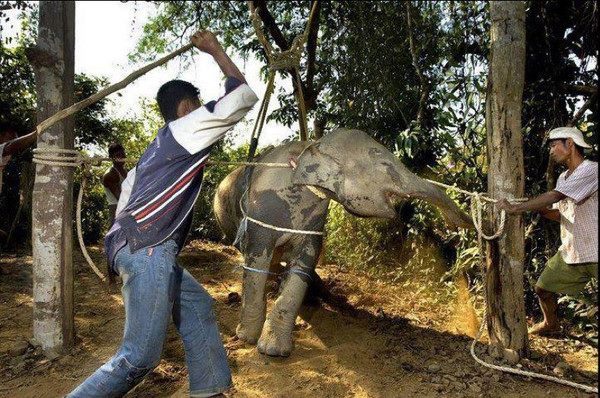
Everyone, tourists especially, needs to be educated as to the plight of the Asian elephant. These animals’ spirits are broken through a ritual known as the Phajaan; baby elephants are prematurely ripped away from their mothers. They are then caged, starved, beaten, stabbed, poked and cut as they are kept awake for days without food or water.
Once “broken”, the young elephants are forced into a life of street-begging, trekking (rides), and “entertainment”, eg. circuses, painting, zoos, etc.
Please EDUCATE yourself and others! Do not support this cruelty by feeding a street beggar (baby elephant begging for food), riding on an elephant’s back (trekking) or attending a show.
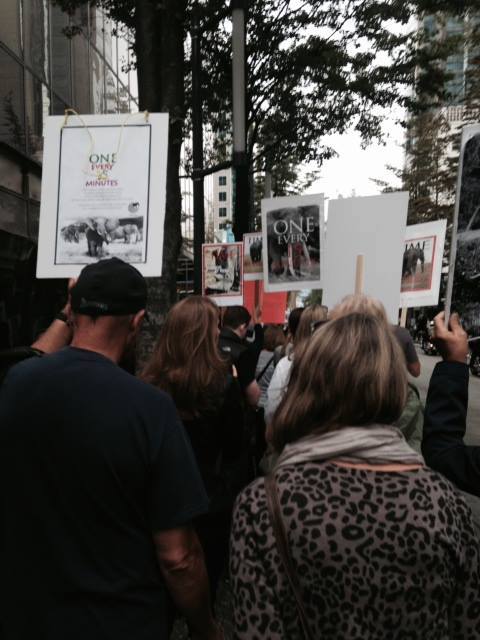
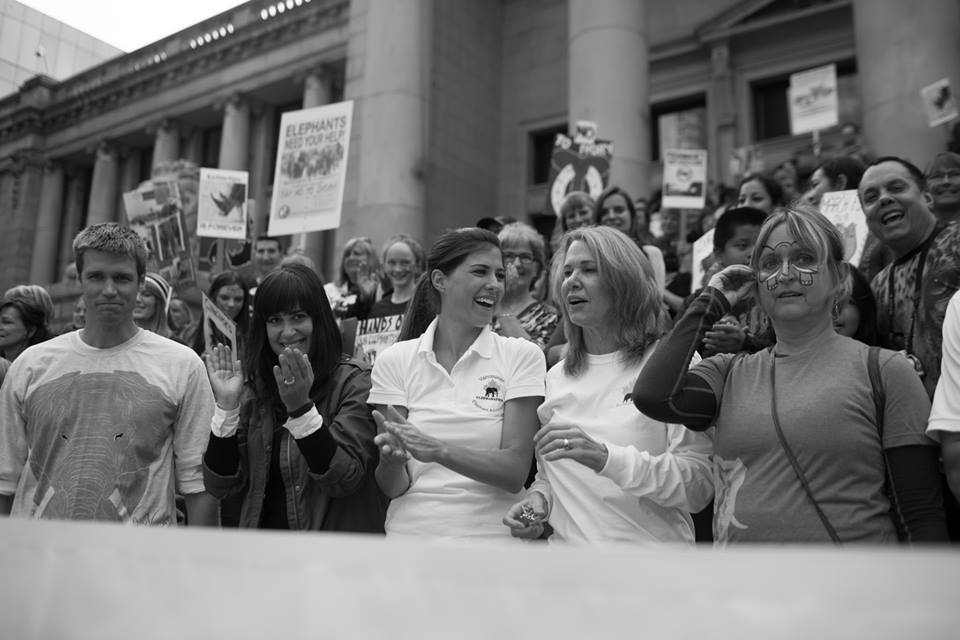
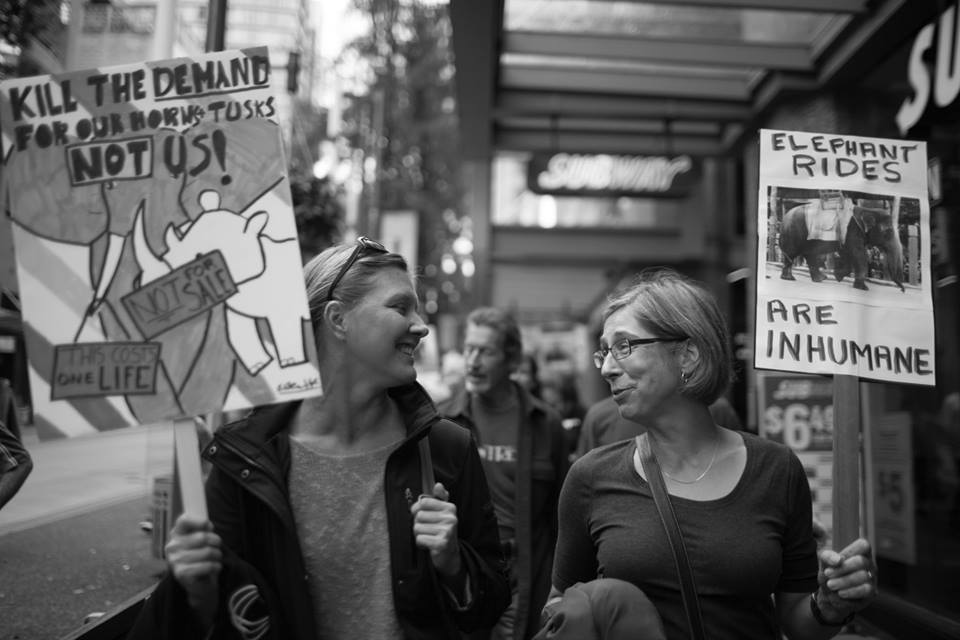
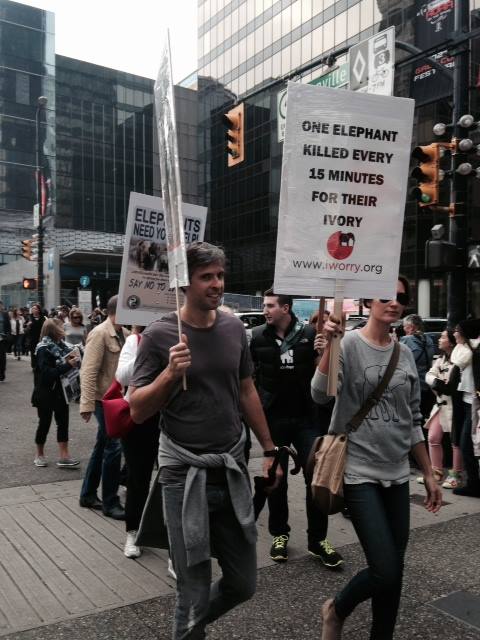
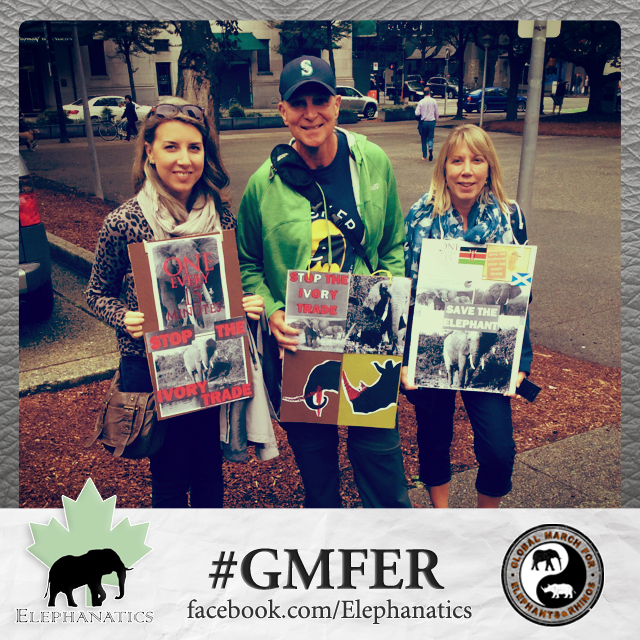
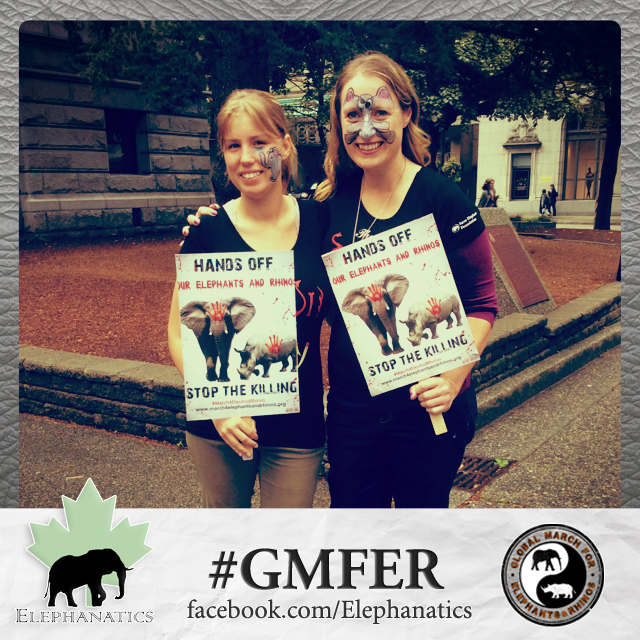
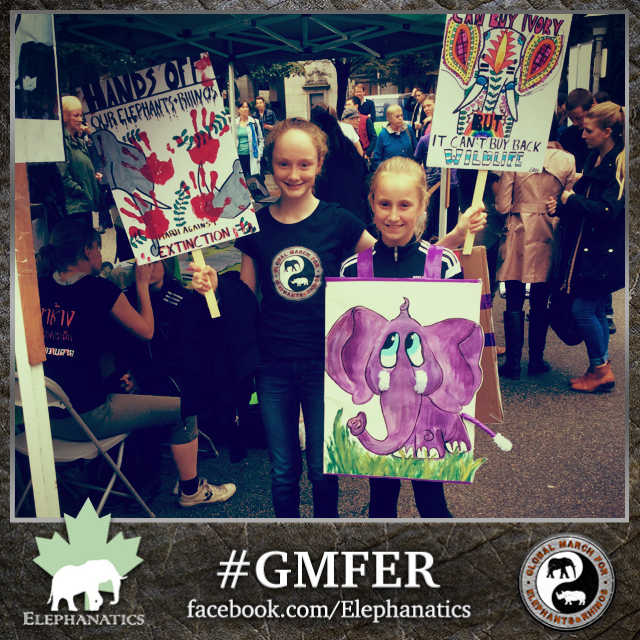
I am proud to have been a part of this amazing, grassroots event that took place October 4th in 136 cities around the world where people all marched to end the ivory and rhino horn trades that threaten these species. Here are a few pictures from the Vancouver event:
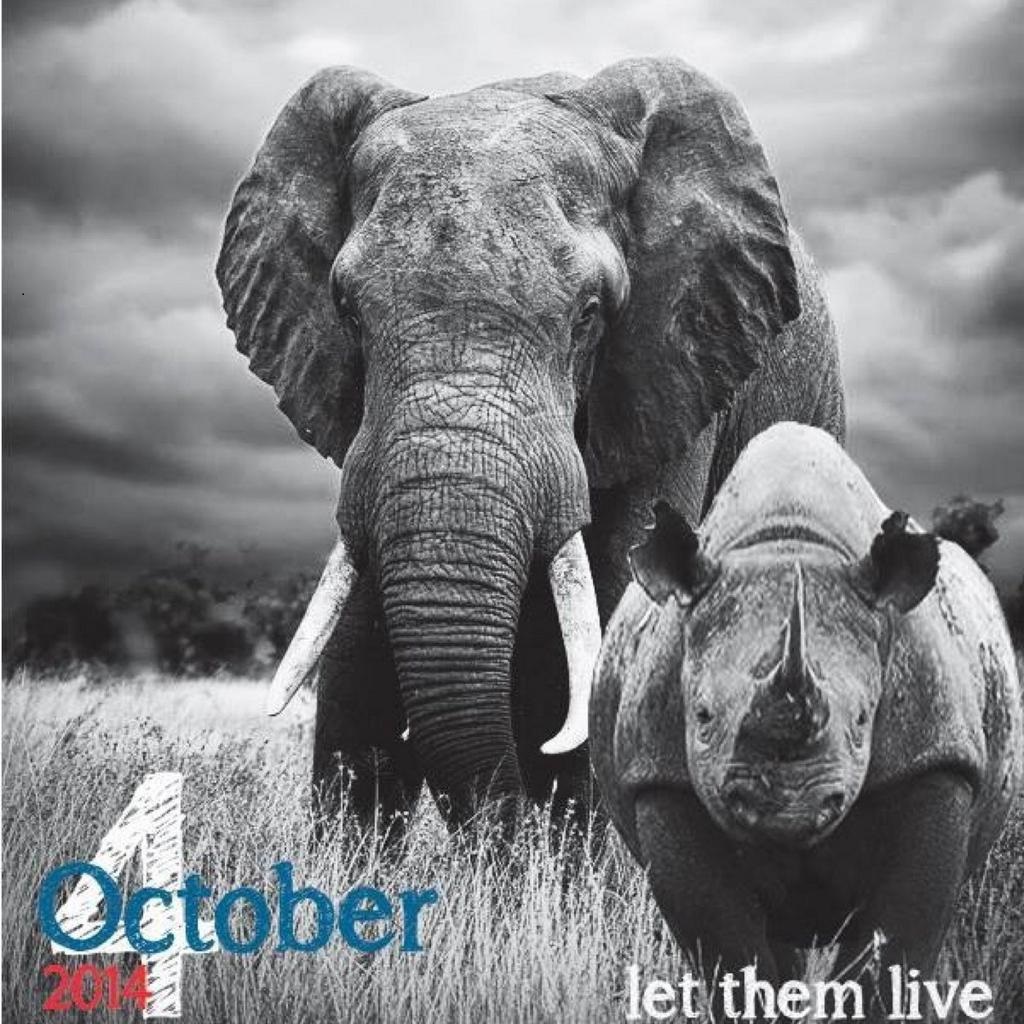
On October 4th 2014 Vancouver will take part in the Global March for Elephants and Rhinos. 130 cities around the world are marching in the biggest demonstration ever to create awareness of the plight of these two species and to demand that governments end the blood ivory and rhino horn trade. This presentation will be shown at the demonstration. Every person who becomes aware and knows about the struggle for survival these species face takes us one step closer to winning the war against extinction. If you can share this with one person you will have helped. Thank you.
This is a quick video detailing the illegal assault on elephant populations. For anyone wanting to the point information on this topic, this is your video.
Title: Global March for Elephants and Rhinos in Vancouver on Oct 4th, 2014
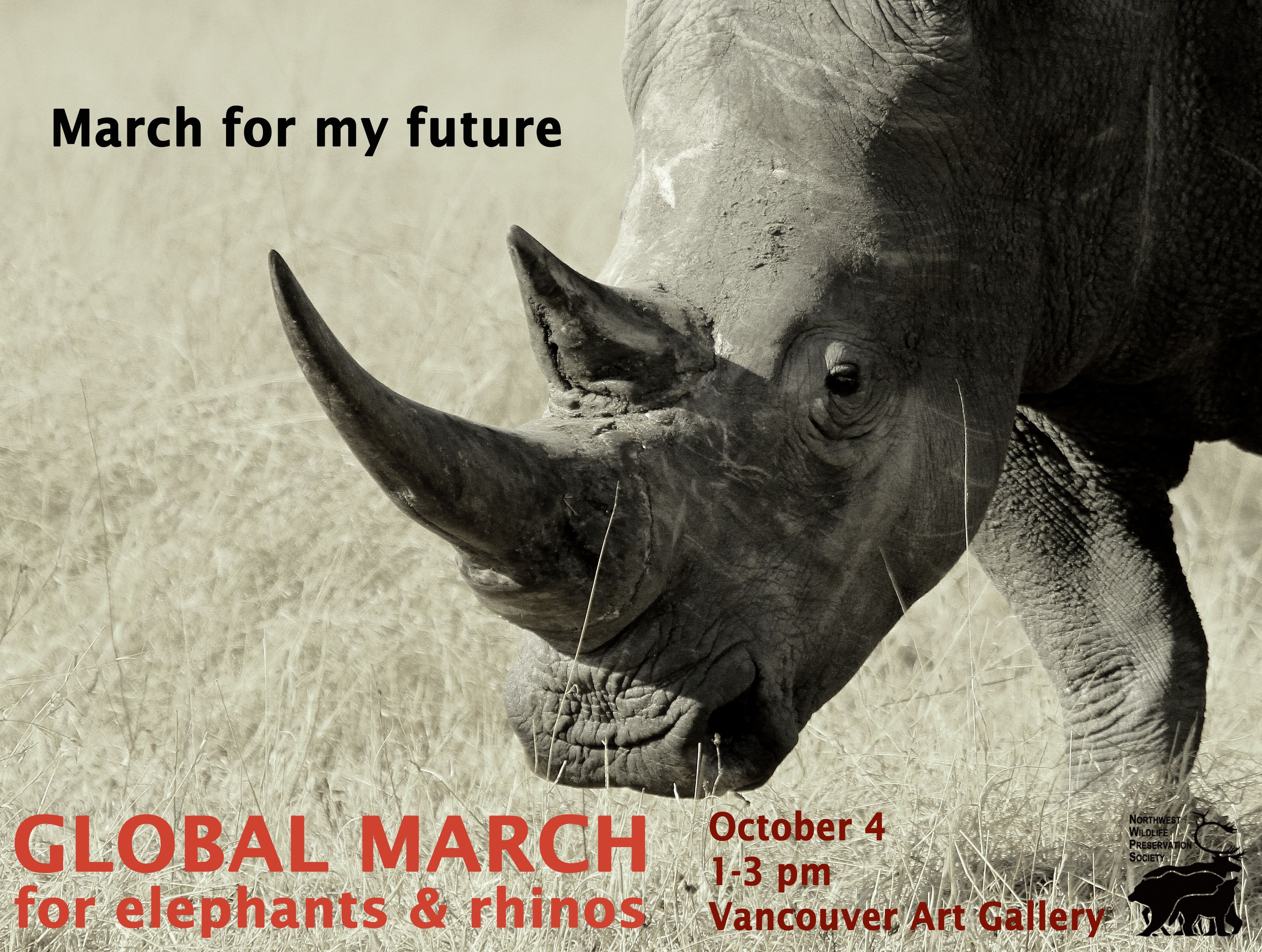
The ‘Global Mach for Elephants and Rhinos’ (GMFER) is taking place in downtown Vancouver for the first time on October 4th (1:00 – 3:00 p.m.) on the north side of the Vancouver Art Gallery.
Vancouver is joining 127 other cities worldwide including Toronto, Edmonton, Halifax, Victoria, Montreal, Ottawa and Sudbury in Canada.
The GMFER hopes to raise awareness about the current unsustainable killing of elephants and rhino for their valuable tusks and horns. The GMFER was initiated in 2013 by the David Sheldrick Wildlife Trust in Kenya.
The illegal wildlife trade is a global problem estimated at USD $20 Billion per annum. Poaching of elephant tusks and rhino horn has been linked to regional instability, organized crime and terrorist networks in Africa.
Elephant tusks are mainly being purchased in China for carvings while rhino horn has been linked to medicinal use in some Asian countries.
A recent study has shown that 100,000 elephants were killed between 2010-2012 and remaining populations are now under threat of extinction.
HRH Duke of Cambridge has said about rhinos: “There are two thousand critically endangered species on the verge of being lost forever. It’s time to choose a side – between the endangered animals and the criminals who kill them for money. I am calling on people all around the world to tell us: whose side are you on?”
The GMFER event will call on governments to publicly destroy their stockpiles of illegal wildlife products, to show “zero tolerance for illegal trading”.
Dr. Jane Goodall has endorsed the GMFER: “We must join forces everywhere to stop the slaughter of elephants and rhinos. They feel pain, they know suffering. We must stop people from buying ivory.”
“Individuals, and society as a whole, can choose to shun ivory, rhino horn, lion and tiger bones as commodities,” say event organizers, “but we need governments to play their part as well, by increasing penalties for bribery, corruption and trafficking offenses.”
In support of the GMFER event, Joanna Lumley, OBE and Fellow of the Royal Geographical Society, says: “If we stand by and watch the brutal extinction of rhino and elephant, the stain of shame on our human consciousness will never be forgiven or forgotten.”
“Endangered leads to Extinction. We must stop the demand for Ivory and Rhino tusks.
Check the products you buy and read your labels carefully, especially Chinese herbal products.
It’s our responsibility to stop what mankind has started,” says Paul Rodgers, well-known singer-songwriter and owner of Willows Animal Sanctuary in Aberdeenshire, who is also in support of the GMFER event.
Invited speakers at this year’s Vancouver event are:
Jake Wall, is a PhD student in the University of British Columbia’s geography department, works for the conservation group Save the Elephants, where he has helped outfit almost 100 of the mammals with GPS satellite-tracking collars. Read more here.
Rosemary Conder, Chief Development Officer for the British Columbia Society for the Prevention of Cruelty to Animals (BC SPCA).
Rosemary went to Asia in 2011 as a volunteer to help rescued elephants who endured lifetimes of abuse. The experience showed her the horror these gentle giants face and the impact tourism is having on them. Elephants have become her friends and teachers. The trip in 2011 to one elephant rescue project became the first of six. Find out more here.
For full details on the Vancouver march click here.
Please help spread the word and join the march on Oct 4th 2014.#March4ElesandRhinos
On October 4, 2014 Vancouver will be taking part in the Global March for Elephants and Rhinos to draw attention to the crisis facing these two species and to call for an end to the ivory and rhino horn trade that is pushing them rapidly towards extinction.
To date, 127 cities across the globe will be marching on that day – this will be the biggest international event ever held to save our planet’s vanishing wildlife, with the focus on elephants and rhinos.
The poaching of elephants and rhinos has reached unprecedented heights in recent years as the demand for ivory and rhino horn has soared in China and other mainly Asian markets. The ivory trade is also fueling terrorist groups, transnational criminal gangs, and armed militias that are destabilizing African countries as well as posing serious threats to international security.
An elephant is brutally killed every 15 minutes – that’s around 100 every day, and at least 35,000 every year. With so few numbers left (some estimates put the figure as low as 250,000 for the entire continent), and with such a slow reproductive cycle, the outlook is looking tragically bleak for elephants. If we don’t take action now to stop this massacre, it will be too late to save them. They will vanish forever – in about 10 years.
A rhino is poached every 11 hours with an estimated 24,000 left in the world. Over 1,000 rhinos were poached last year alone, compared to 13 in 2007. If the rate of killing continues to rise, rhinos too face extinction within the decade.
1:00 to 1:30
Opening events
We have drummers, face painters, photographers, a fun quiz, and items for sale! We need volunteers the most during this time (beginning at 12:45) to help people register, take photos and sign our petition. There will be charitable items for sale by donation during this time (cash only).
1:30 to 1:35
Introductions by organizers
1:35 to 1:50
Speaker Jake Wall
Jake wall is a PhD student at UBC and an African elephant researcher with Save the Elephants.
1:50 to 2:05
Speaker Rosemary Conder
Rosemary is the Chief Development Officer of the BCSPCA and an elephant advocate, with a particular interest in ethical tourism.
2:05 to 2:35
March!
March Route: Georgia to Granville Station, Granville Station to Waterfront Station, Waterfront Station to Burrard Station, to Robson Street and Hornby back to the Gallery
2:35 -3:00
Closing remarks, learn “What You Can Do”, and more pictures!
While we will have some signs to hand out we encourage you to make one at home and bring it along. For ours we used:
paint stir sticks as handles
foam core to mount the poster on both sides
glue – to glue it all together
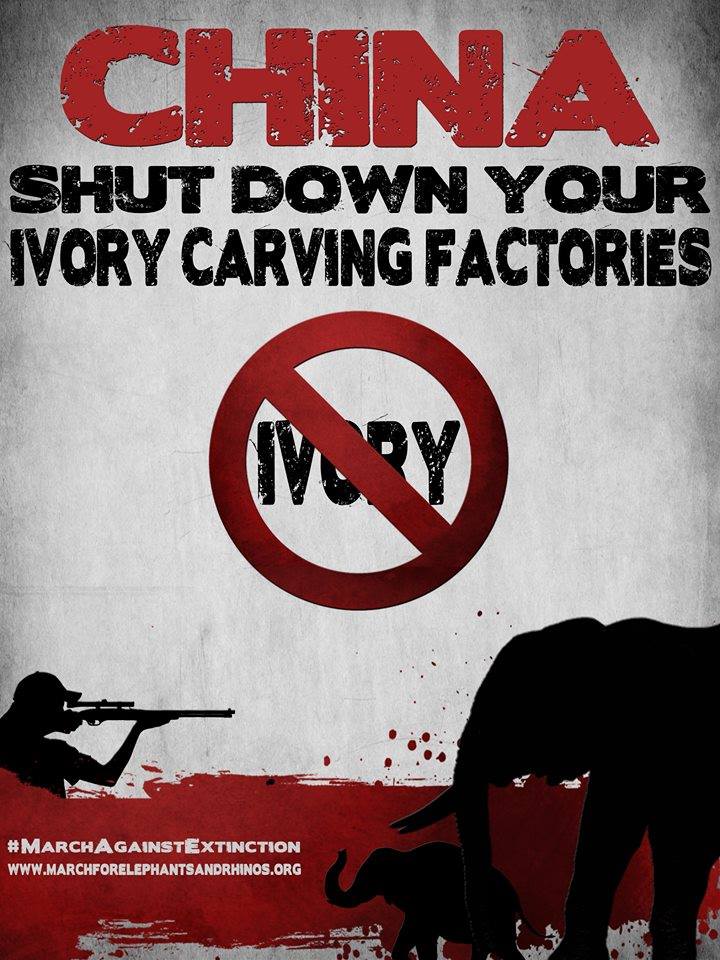
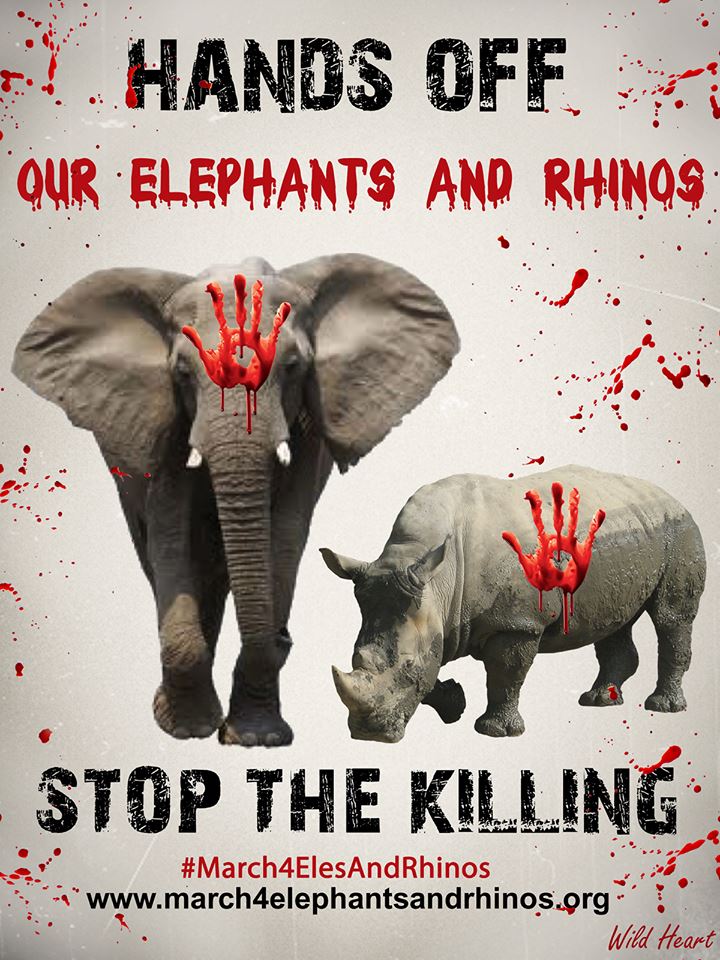
Here is some artwork you can use or you can make your own! More to come!
Face painting – We’re super lucky to have someone volunteer to face paint. Here are some fantastic designs to choose from. Elephant Face Paint Designs
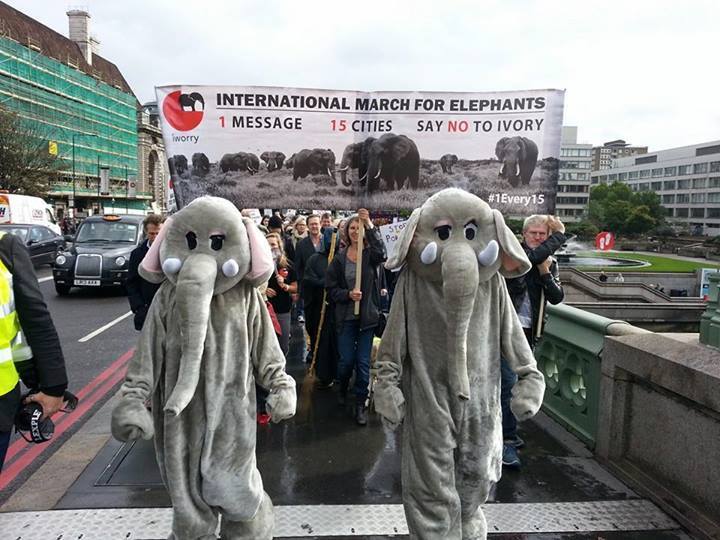
Marchers in Israel and London!
Capturing attention and having fun at the same time is important. Here are some examples of other marchers:
Protest against Canned Lion Hunting in Israel.
Getting the Word Out
Please help us get the word out. The more people who realize the issues facing these animals, the more of an impact we are able to make on October 4th, the more signatures and MP’s we contact the better the outcome for elephants and rhinos. Let’s make NOISE.
If you have local media, please send them this release:
Please use this poster to publicize the march. Send it to friends and family, post it at your local library coffee shops.
Finalposter – please print or email to your networks.
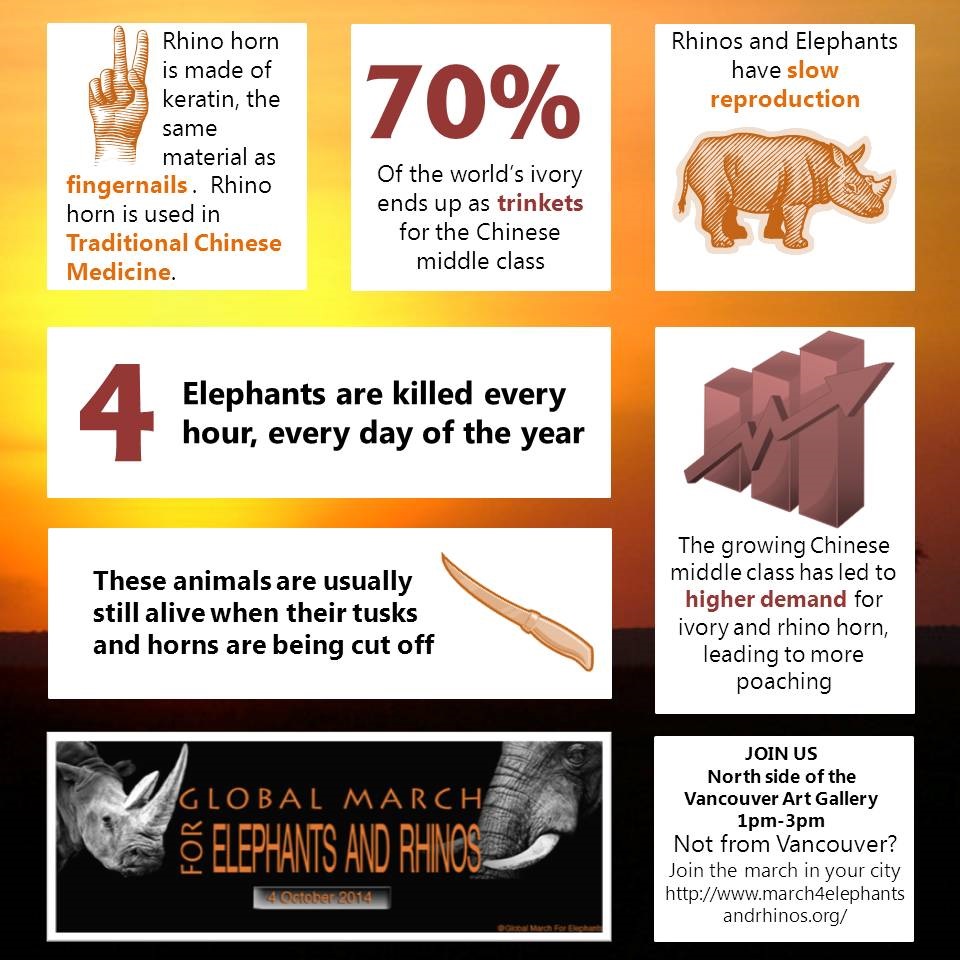
These smaller promo pieces can be used to hand out to your networks.
Petitions are the life blood of the march. This is how we really make noise. Getting signatures is important. If you can print a copy of this and get signatures and bring it to the march to hand in to organizers that would be amazing and we’ll love you forever.
Tell people about what you know. (See media below and share)
Take what you know and let your government rep know.
Support people working the front lines.You can do this by “liking” these groups on facebook and social media, sharing stories and news, supporting them by supporting their fundraisers – buy t-shirts, adopt orphans as gifts, or fundraise for them. Do NOT support animals in tourism. Elephant rides and treks are all a part of a system of terrible animal abuse. Tell people. Excellent organizations to support are:
“”As the dominant species on this planet it is our moral duty to protect and preserve all forms of life. For species such as Elephants and Rhinos to be fighting for their existence due to human exploitation and interference is unacceptable and we must do everything within our power to turn this dire situation around. We are responsible for the problem and we must be held responsible for the solution. It will indeed be a very sad indictment on our species if Rhinos and Elephants are no more, and that day will come sooner than we think if we do not take action.”
Canada AM – August 2014 Greg Gubitz – Big Life Foundation – Why Elephant Poaching Is On the Rise – “We don’t stand a chance unless we drive down demand”
Don’t let anyone discourage you from social action. Protest, pushing government and organizations to change works but we need to work together, have fun while getting some serious things done. If we don’t do this, these animals can’t save themselves.
The Global March for Elephants and Rhinos October 4th, 2014 has the support of the following NGO’s
ElephantVoices, The David Sheldrick Wildlife Trust, Amboseli Trust for Elephants, Elephants Without Borders, Performing Animal Welfare Society – PAWS, the Jane Goodall Institute, Born Free Foundation, Born Free USA, Animal Defenders International, In Defense of Animals, David Shepherd Wildlife Foundation, The Rhino Orphanage, United for Wildlife, IAPF – International Anti Poaching Foundation – www.iapf.org
Mrs Helen Clark, head of United Nations Development Program for your support and inspiration in a call to action for support of the Global March for Elephants and Rhinos!!!!
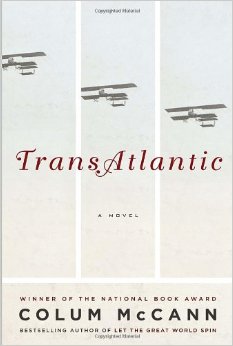
I’m not going to make you read until the end of the review to find out that I loved this book. I loved it. I read Colin McCann’s Let the Great World Spin a few years ago and fell beautifully in love with his writing and storytelling. In Let the Great World Spin he uses the infamous tightrope walk executed by Philippe Petit in New York 1974 where literally the city holds its collective breath as they watch Petit dance between the World Trade towers. True story. He uses this historic event to weave together an incredible tale that connects a number of people who all witnessed this event. What emerges is a portrait of America post Vietnam.
In TransAtlantic he does it again but this time he celebrates the connection between Ireland, America and Canada in a book that spans four generations. This time the historic event on which the remainder of the story turns is the first transatlantic flight by WW1 vets Alcock and Brown who are vying to win 10,000 pounds for being the first to carry mail from the New world to the Old by aircraft.
In each chapter McCann introduces a new piece of the puzzle, and a character who plays a bit part in the previous chapter sweeps forward and takes centre stage. It sounds simple but it’s masterful. What emerges is a portrait of a generation of 4 women, Lily, Emily, Lottie and Hannah which spans from the mid 1800’s to 1998. Each of these women interact with known historic male figures – the African American slave Frederick Douglass, (he travels to Ireland in 1845 to advocate for the abolishment of slavery), the aviators, and Senator George Mitchell, who brokered a peace deal for Ireland in 1998.
The interactions with these men provides the historic framework on which the novel rests and through it we travel through time, from Ireland in the 1840’s through to the Civil War where Lily Duggan escapes to work as a nurse. The reader weaves through history and place through the emotional lives and history of Lily Duggan and her daughter and granddaughters.
For those of you wanting more rave reviews Lawrence Hill wrote this for the National Post – a great writer writing a review of another great writer’s book.
I had Lisa Moore’s February (longlisted for the Man Booker Prize) on my shelf for some time and I just picked it up quite randomly and I’m thrilled that I did.
The story is about a woman Helen, who loses her husband Cal, on a rig that sunk off the coast of Newfoundland on Valentine’s Day 1982, leaving her pregnant with 4 young children to raise. The story is essentially about grief and how it takes more than a lifetime to recover from the loss of love, real, honest, sexy, beautiful, heart wrenching love. You feel the shock of Helen’s loss even years after his death because she lives in him and with him in a real but unsentimental way. The beauty in this book, though, is in the writing.
There are a few scenes I love in particular. The pages that describe their wedding reception and hasty retreat to the local hotel reminds me of the wedding scene in the Deer Hunter. It felt real, honest and solid, its deceptive simplicity belying the complexity of two people bringing their lives together and all the nuances and feelings that knit the emotional fabric together.
Here is a sample, “…all of that was in the mirror on their wedding night, and – POW -Cal glanced at it, and the mirror speed with cracks that ran all the way to the elaborate curlicue mahogany frame, and it all fell to the carpet, fifty or so jagged pieces. Or the mirror buckled, or it bucked or it curled like a wave and splashed onto the carpet and froze there into hard jagged pieces. It happen so fast that Cal walked over the glass in his baste feet before he knew what he was doing, and he was not cut. It was not that the breaking mirror brought them bad luck. Helen didn’t believe that. But all the bad luck to come was in Cal’ s glance, and when he looked at the mirror the bad luck busted out.”
The second scene is when Helen reveals how she found out about Cal’s death but I’ll leave that for you to read to find out but I think I held my breath through all of those aching pages. The sadness goes beyond the mere fact of Cal’s death but the beauty of the language that delivers the story. Wow, the entire novel is sprinkled with magical language and sometimes surreal scenes. So thumbs up, give it a read. You won’t be disappointed.
once you start advocating on their behalf it’s hard to stop. How do you say ” I can’t do this, it’s too hard” .So I don’t. Here forthwith is the cutest and youngest baby elephant ever rescued by the David Sheldrick Wildlife Trust. Watch amazing video of this baby at the end of this post.
via @DSWT Little Ndotto’s progress
Last week our teams were called to the Ndoto Mountains to rescue the tiniest baby elephant we have ever cared for.
Rescued by helicopter, this tiny bundle was delivered to the Nairobi Nursery wrapped in a blanket, his ears still petal pink. Our elephant keepers looked on in disbelief as this tiny package was unwrapped.
We named him Ndotto after his home, a beautiful and remote mountain range in northern Kenya.
Ndotto has not yet been placed on the fostering program, but we wanted to share a short film to show how he is doing a week down the line.
We thank all those people involved in saving Ndotto and the kindhearted Samburu community who went to such lengths to keep him safe.

 ”Phajaan to Tourist Attraction: Elephant Tourism in Thailand”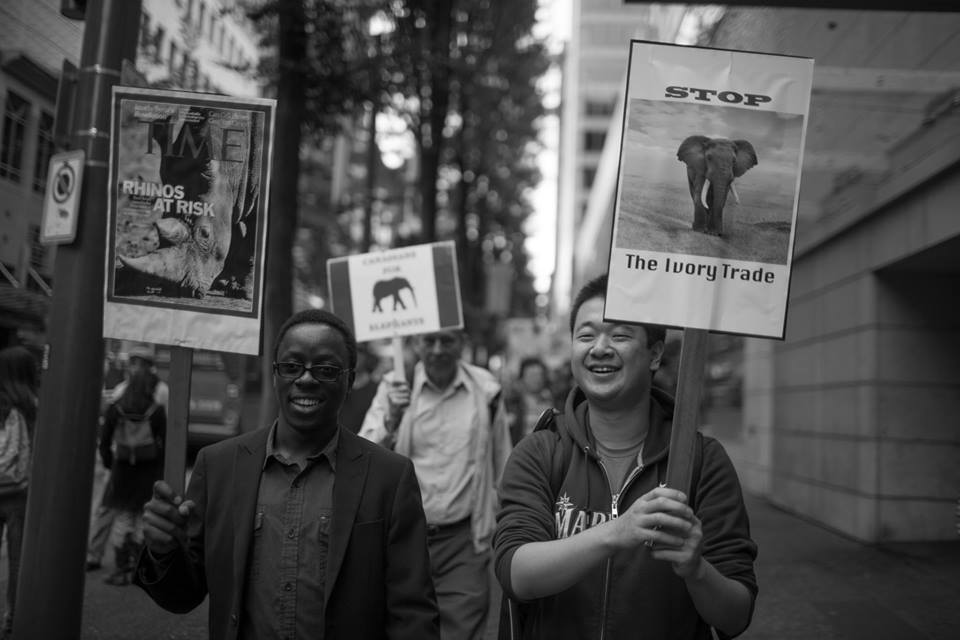












 Condofire