Category Archives: Book Reviews

Moods: Variation II

I probably was more than a little sad when I wrote this sad little song in the dark months following my mama’s passing but it I kinda like it.


The non-mathematical inequality of grief
that the person who dies
rises to the occasion
in an unexpected way
that the person
who is dying
grows into their death, into their dying-ness
like a hero
like a person who suddenly
understands
what it is to die
what it is to have lived
who accepts
graciously
the gifts
that life has given them
that they know
there is no point
in painful exploration of why, why, why
although they are only human
so they are afraid
not of dying
but of leaving behind
of not knowing
what twists their illness will inflict on them
that the person who is dying
who rises graciously to the occasion
helps you discover
more about them in these last moments
hours and days
than you ever thought you would
that you learn that the capacity for joy, love
and laughter
is no way diminished by their dying-ness
that their love of music, life
shines through
even in their gravest hour
that you never expected to be so engaged
feel love so fully
want to know this person even better
in these final hours
that when they suddenly take your hand
and swing it to the music
that this effervescent life force
this magnificent zest
continues
even in the dying person’s darkest hour
that this feeling of sheer unbreakable unknowable
and crazy love increases as each moment passes
making the chasm between life and death ever greater
knowing that the inverse proportion of wanting to love more is
in direct opposition to the ability to hold life
that death is the only state in which there is truly no hope.
that everything now can only exist in your heart
that there can be no more conversations
no more handholding
no more wry observations on the passing of life
no more sweetnesses
no more declarations of this is it
no more drinking of wine
and no more motherly assurances
that yes everything will be okay.

2 Comments

Filed under Book Reviews, Random Musing

Blurbondency: how do you react to bamboozling book blurbs? (via Lynsey May writes down the night)

I love Lynsey’s rant on “blurbondency”. I have to say, I’ve run into this myself from time to time.

Blurbondency – The feeling of let down and confusion that follows reading a book because it has a blurb from one of your favourite authors, only to find the book disappointing and unreadable. Self doubt and a re-examination of bookshelves is also to be expected. Blurbs are powerful things. They act as the same kind of seal of approval you’re looking for when you’re eyeing up a potential date. I’ve picked up and taken home plenty of books thanks t … Read More

via Lynsey May writes down the night

Leave a comment

Filed under Book Reviews

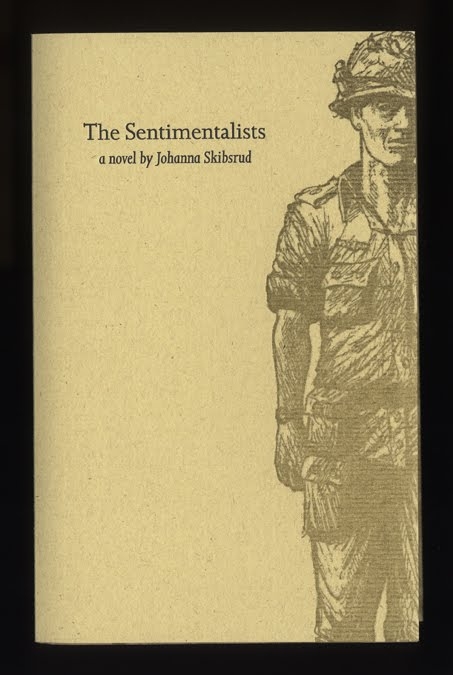
The Sentimentalists by Johanna Skibsrud: A book review


I can’t imagine two first-time novels being more different than The Bone Cage and Johanna Skibsrud’s Giller Prize winner The Sentimentalists. The former relies heavily on the meat and potatoes of narrative writing while the latter delivers a slow evocative story with beautiful, lyrical passages that pause (sometimes endlessly) on details that don’t often advance the story.

Johanna Skibrud clearly lends her poetic talents to this thoughtful exploration of the impact of war and memory on family and the isolation it creates in generations that come long after the war is over.

Napoleon Haskell is an American Vietnam war veteran who leaves his North Dakota trailer home and moves to Casablanca, Ontario to live with Henry, the father of his best friend Owen, who died under mysterious circumstances during the war. His grown, daughter, whose own life is at a crossroads, goes to spend the summer with her father and Henry at the old house where she had spent many summers as a child. Continue reading

2 Comments

Filed under Book Reviews

The Bone Cage by Angie Abdou: Book Review

Angie Abdou’s first novel The Bone Cage was a Christmas gift and is the first book on this year’s reading list. Dave bought it for me because he heard about it on Canada Reads and thought it would interest me because I worked on a series called Sport and Society last year that focussed on Olympic athletes.

In The Bone Cage Abdou introduces us to Sadie and Digger two University of Calgary-based athletes on their way to the Sydney Olympics. Both Sadie who is a swimmer and Digger who is a wrestler are at the end of their sporting careers and this is their last chance to make it to the big ‘show’, the Sydney Olympics. This is the sporting event that they have trained for their entire lives and their chance to finally shine in the public light.

This is a really quick read and offers a glimpse in to the world of the elite athlete. The grueling hours of work, the lack of recognition, the personal sacrifices that have to be made, training with little or no funding, the inability to focus on anything else in life except personal performance and the toll this pursuit has on the athlete’s body.

Abdou touches not only on the mental strength it takes to make this journey but also the physical pain that is endured by almost every athlete as they inevitably encounter injuries that must be overcome. The book does raise some ethical questions about some dangerous practices athletes are willing to undergo in order to make the team or reach a particular goal. For example, Digger and his team mates dehydrate themselves completely by wearing plastic and exercising in a hot sauna in order to make weight.

I think it’s important to have these kinds of stories told because we’re often seduced by the bright lights of the Olympics. The book raises the question of how we support our athletes, should we support them and in what way, do we put too much pressure on them to reach increasingly difficult goals, and how far can we drive the human body?

I’m interested in this topic so the book was an easy enjoyable read for me. But I thought overall the characters were somewhat wooden as was the relationship  between Sadie and Digger. When Abdou wasn’t writing about actual training or sports the words and the story didn’t quite flow as naturally as it could have.

I mentioned this book to my friend who is a high school teacher because I think it has a lot to offer in terms of the topic and I think anyone interested in elite sports or athletics would find this a good read.

1 Comment

Filed under Book Reviews

2011 Reading List

Last year this time I came up with the great idea that I would read 100 books in 2010. Of course I forgot about the Olympics, I also forgot to calculate exactly how much reading this would require and last but not least I forgot about life. So I never attained this goal. Am I sad? No.  Instead I read at my leisure and came across some amazing writers.

This year Dave and I gave each other books and lots of em’. My reading list for this year is looking like this:

The Bone Cage by Angie Abdou
The Sentimentalist by Johanna Skibsrud
Vimy by Pierre Berton
Blink by Malcolm Gladwell
The Cellist of Sarajevo by Steve Galloway
The Third Reich at War by Richard Evans (Dave said this was an amazing book)
Dispatches by Michael Herr
The Trouble with Islam Today by Irshad Manji
Sea Sick: The Global Ocean in Crisis by Alana Mitchell
The Shallows (I decided to read this after reading this review) Nicholas Carr
What the Dog Saw by Malcolm Gladwell

Any recommendations? I love to hear about great books either fiction or non-fiction so drop me a line if I’m missing out on something great.

Leave a comment

Filed under Book Reviews

My Great Reads 2010

I started 2010 out with the ambition of reading 100 books this year. Like all great plans mine was waylaid by the exigencies of life. I did, however, still manage to read some great books.

My top reads this year are:
1. My absolute favourite read this year is Let the Great World Spin by Colum McCann – a great literary read that uses an interesting cultural device to tell an expansive and wonderful story.

2. Brief Interviews with Hideous MenDavid Foster Wallace – Wow, I found this book to be a breath of fresh air. It’s very literary but it breaks free from the usual storytelling devices and then on top of that it contains some really amazing stories. It’s changed the way I believe people can write about things.

3. The Elegance of the Hedgehog – Muriel Barbery – This is just a wonderful read. Written by a French writer it explores unlikely friendships within the quagmire of the French class system. You’ll laugh, you’ll cry, you’ll want to read it again.

4. infidel Ayaan Hirsi Ali – I don’t read very much non-fiction but I thought this offered a glimpse into a world I know very little about. It makes me want to know more about women and Islam.

5. Freedom Jonathan Franzen – Because he tells a great story that speaks to our times. And he gets bonus points for making me laugh.

6. Loving Frank – Nancy Horan – A great story about Frank Lloyd Wright‘s lover Martha Borthwick. It’s one of those books you can’t put down.

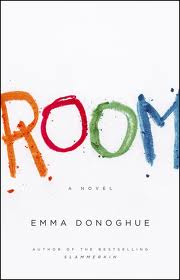
7. Room – Emma Donaghue – Well there’s no question that this is a creepy story about a woman who gives birth to a little boy while she is enslaved in a small room for seven years, but wow does Emma Donoghue ever create a singularly believable voice for young Jack.

8. The Guernsey Literary and Potato Peel Pie Society by Annie Barrows and Mary Ann Shaffer – I’m a sucker for any books on war and this one is a great read. I’m now eager to travel to Guernsey now that I know it exists.

9. Mansfield Park – Jane Austen – I completely immersed myself in Ms. Austen’s world when I was reading this. What a testament to the durability of great literature.

10. Tuesday’s With Morrie by Mitch Album – Because this book helped me understand dying better and that’s something I needed to learn about this year.

I’m starting next year’s list which includes:
Irshad Manji – The Trouble with Islam Today
Sea Sick – The Global Ocean in Crisis
Malcolm Gladwell – Blink and What the Dog Saw

I would love to hear from others any recommendations you might have for fiction or non-fiction that I can put on my ‘must read’ list.

Thanks,

Tess

Leave a comment

Filed under Book Reviews, Random Musing

Room: Emma Donoghue Guest Book Review Savannah Morin


Big thanks to Savannah for contributing this guest review of Emma Donoghue’s Room.

Room haunted me for days after I had finished it. A profoundly disturbing premise, it was mostly affecting because it could be real. The story is told from 5-year-old Jack’s perspective. Jack is living in an 11 by 11 foot room with Ma, the only person he has interaction with. Everything he sees in Room is everything he knows. He is under the impression that Room is everything; there is no outside, there is no world, no nature or other girls and boys. There is just Jack and Ma. The story captures you right from the beginning because it leaps into just how sheltered Jack is about the world, and just how deranged their living situation is. It implores you to wonder how could anybody live like this. Jack’s Ma had been captured and raped and held prisoner in Room, to her a living nightmare. She keeps Jack happy by inventing multiple games and tasks for them to do during the day; math, exercise, crafts and cooking, amongst many other things.

Finally the time comes where Ma cannot stand it any longer; she starts to reveal to Jack that there is a real world out there; an outside, real people and things to do. There is so much to tell, so many rules to break and to explain it to innocent five-year-old Jack is nearly impossible and frustrating. Once she realizes how much she has held back from Jack, the more Ma knows they have to get out of Room.

What was most impressive and interesting about this book was the intricate world that Ma had built for herself and Jack, no details were left out, all horrors were brought to the surface and a real life situation is unveiled. Suspenseful, disturbing and enthralling this story of survival and circumstance is a fascinating read to the very end. I highly recommend this book to sophisticated readers who will enjoy a painfully truthful and entertaining ride that doesn’t hold back.

2 Comments

Filed under Book Reviews

Freedom: Jonathan Franzen Book Review

Jonathan Franzen at the 2008 Brooklyn Book Fes...

Image via Wikipedia

Jonathan Franzen‘s Freedom at 562 pages is a remarkably fast and compelling read. But don’t let the simplicity of the language fool you. He uses the long sweeping lens of the 19th century novel and non-distracting language to deliver a story that explores a big idea. Freedom. The ideals of freedom are after all what underpin the political structure of the United States where the story unfolds and it is in the name of freedom that so many grave misdeeds are exacted both personally and politically.

Franzen’s instinct for telling a great story starts with what the reader can easily relate to and in this case it’s family. Franzen tells us the story of Patty and Walter Berglund and their two children Joey and Jessica. Patty, a housewife and Walter, a morally upright lawyer (and needless to say Democrat) and passionate conservationist start their life together in an old Victorian house just outside of St. Paul’s. Patty, a former college basketball star is a young beautiful woman who devotes herself enthusiastically to her children and community.

But the dysfunction of each of their respective childhoods ultimately sets them on a collision course of dysfunction within their own family. The catalyst is Joey, the handsome son that Patty overly dotes on. Not only does his precocious sexual promiscuity with the neighbour’s girl Connie leave Patty unhinged, but when he decides to move in with Connie’s mother and boyfriend the entire Berglund family, but especially Patty fall apart. You see, the neighbours are Republicans. The personal shame of having your teenage son reject you is one thing, but that he rejects you and goes on to become a Republican is entirely another. Patty suffers terribly and begins to drink and obsess about Walter’s best friend from college Richard Katz, a man who is Walter’s opposite in most ways.

When the Berglunds leave for Washington where Walter accepts a post with a land conversancy group, Franzen begins to explore the outer politcal structure of what freedom means.

For Walter, the world is fast-tracking to environmental disaster leading him to make some crazy decisions in the name of environmentalism. Patty is free to do however she chooses and instead chooses nothing leaving her miserable. For Joey, freedom is making fast money off dubious contracts from the war in Iraq. For the American government it’s free to protect ‘freedom’ by ruthlessly invading a country for geopolitical reasons unrelated to freedom.

The happiest characters are Lalitha, Walter’s assistant, ultimately Joey and the symbol of birds that are very much a part of the personal and political narrative of this book.

In the end you really have to ask yourself what happiness is. But as a reader from the outside Lalitha certainly seems on balance to be ‘happy’. And who is she? She is someone who has well-intended purpose and acts on it and she has love. And Joey…while Joey gets off to a rough start he is an interesting character because he has strong instincts. As long as he makes decisions in reaction to things outside of himself then he sets himself on a collision course with unhappiness. But when he truly follows his heart the course of his life begins to change.

And birds. There’s the expression “We’re free as birds”. And there’s the eagle as the symbol of American strength and freedom. But are birds really free? Are they free of work, purpose and intention? They can’t be or they wouldn’t survive.

So I look at these three characters and I believe that what Franzen wants the reader to see is that freedom starts with the personal. That freedom starts with purpose, intention, instinct and truth. And that if we act on these it won’t be so easy to get lost in the maze of reaction and thoughtlessness.

If you aren’t inspired to read this book for all the reasons above then you might consider reading it for Franzen’s fine ear for dialogue. This book has some excruciatingly funny moments in it where I was able to laugh out loud, very hard. I think I will put the Corrections on my list for next year. Good read. Thanks Jonathan for getting through your writing block.

5 Comments

Filed under Book Reviews

Brief Interviews with Hideous Men: David Foster Wallace Book Review

I’ve been wanting to read David Foster Wallace for a long time and finally read Brief Interviews with Hideous Men. I’m not going to lie. This isn’t an easy read and there were times when I wanted to throw the book across the room. This is no ordinary collection of stories and reviewing David Foster Wallace is intimidating in itself. He has an impressive intellect and a virtuoso command of language. And truthfully, that’s what keeps you going. Just when you think you’ve had enough of his linguistic experimentations or his penchant for pursuing the darkest corners of human nature with mathematical precision, you find yourself picking up the book (from wherever you’ve thrown it) and reading on. Continue reading

1 Comment

Filed under Book Reviews, Random Musing

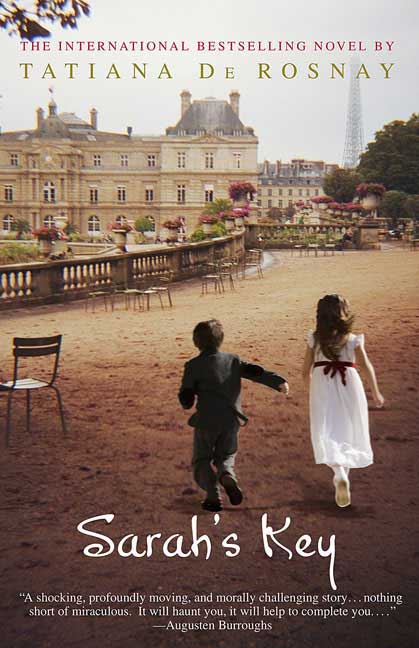
Sarah’s Key a novel by Tatiana De Rosnay: Book Review

I’ve read enough books to know that I enjoy ‘war books’ particularly books that deal with the Second World War. While Dave is busy lapping up the more hard coreThe Third Reich at War by Richard R. Evans, I have just finished reading Sarah’s Key, the story of Sarah Strazinsky, whose family along with 13,000 other Jews, is rounded up by French police on July 16th, 1942 and sent to  Vel D’hiv where they were eventually transported to Auschwitz for extermination.

In the opening pages of the novel when the knock comes at the door and Sarah hears French voices she’s confused by her mother’s fear. Surely, Sarah thinks, it’s only Germans they needed to be afraid of.

So begins the story of Sarah’s life as she and her mother and father are marched through the streets to the Vel D’hiv along with 13,000 others. Sarah locks her younger brother in their secret hiding place but takes the key to the cupboard with her, knowing that she will somehow go back to save him.

The story of Sarah’s life is told both by Sarah herself but also by Julia Jarmond a journalist who is asked to write a 60th anniversary commemorative piece on the Vel D’hiv round-up. While few people, including her own husband’s family talk about or even seem to know much about this period of French history, Julia’s research and soon to be obsession, bring her directly to the story of Sarah Starzinski.

Much like the movie Julie and Julia I quite enjoyed the story of Julia Child and not so much the story of Julie (which let’s face it was boring). In this case the structure works well initially when De Rosnay goes back and forth between the two stories. But halfway through the book, Sarah’s story as told through her eyes, is abandoned and we are left with the much less interesting story of Julia and her crummy husband, as she searches for what happened to Sarah and her family.

All in all I think this is a good read. The book is fast-paced and the early sections, particularly as told by Sarah herself are riveting accounts of fictionalized history. The story telling for the most part is good and is weakened only in the latter half of the book when the story focusses more on Julia’s journey. While this isn’t a great literary read, it’s an amazing story of a little known period of French history.

Other books I’ve read on related themes:
The Guernsey Literary and Potato Peel Pie Society by Annie Barrows and Mary Ann Shaffer
Atonement by Ian McEwan
The History of Love by Nicole Krauss
Extremely Loud and Incredibly Close by Jonathan Saffran Foer
Suite Francaise by Irene Nemirovksy
Things They Carried by Tim O’brien

Leave a comment

Filed under Book Reviews