Category Archives: Book Reviews

Let the Great World Spin: Colum McCann Book Review

What a great title. What an amazing image. And let me tell you something else, Colum McCann delivers in imagery, language, structure and sheer moments of heart wrenching beauty in telling a story that begins with the famous highwire tightrope walk that Philippe Petit did between the Twin Towers in New York City on August 6th, 1974.

Like an angel poised high above the city, the tightrope walker balances between life and death, beauty and horror, strength and frailty. And as New Yorker’s collectively held their breath below watching this fine balancing act, McCann with an almost spin of the dice begins to tell stories of people from all walks of life who were connected by the experience of either hearing or seeing the tightrope walker on that hot August day.

From the young Irish priest who offers kindness and grace to prostitutes in the Bronx, to a judge and his wife who suffer the loss of their only son in Vietnam, to two young orphans who survive the carnage of their mother’s terrible life and her untimely death, these portraits and others show a city in the aftermath of an unforgiving war and still deeply divided by race and class.

Ultimately all these stories coalesce into a single point where the dots connect. Not only does the experience of the tightrope walker connect these seemingly disparate lives but what McCann evokes in his characters is the terrible burden and the incredible beauty of their humanity. Like a prism he turns his cast into the light so we can see them more clearly.

There are so many times when I can feel something but I can’t express it. I feel that there is language in this book that has given expression to some of these very personal feelings and in doing so has grounded me in the larger human experience. Even a line as simple as “sometimes we go on existing in a place even after we left it.” uses so few words to express a mountain of feeling.

Dave is reading Shantaram right now. He loves to torture me by reading excerpts. I demand that he stop. It makes me cringe. The language is florid and the writer is in love with his word count as much as he seems to be in love with himself.

Colum McCann is precisely the opposite. He is proof that you don’t need a lot of words to make it count. He delivers the story in sometimes spare, poetic language that allows you to feel and understand the moment for what it is. His language serves up the plain, raw experience that being human can often be.

In setting the story in 1974 he is able to cast the Twin Towers as a cultural icon before their terrible destruction. It also allows him to explore the impact of war on a city as complex as New York City where race and class issues are still unevenly resolved. And yet there are moments, as in when Gloria and Claire are able to set aside their obvious life differences and simply allow love to prevail that you realize that there is a kind of moving forward. That there is hope. That life can be beautiful. Like the image of the tightrope walker, life is beautiful and terrible and fragile.

You probably didn’t have to read this far to guess that I thought this was an amazing book.
Interview with Colum McCann

1 Comment

Filed under Book Reviews

The Adulterer: Richard Wright Book Review

Maybe this book reminds me too much of the publishing industry whence I came, or maybe it reminded me of Ian McEwan’s style of writing and then failed to deliver or maybe I just didn’t like the main character Daniel Fielding but whatever it was this book didn’t do it for me in spite of it’s titillating subject matter.

Daniel Fielding is a middle aged, happily married Toronto based editor who has an affair with a younger colleague on a business trip to London and Frankfurt. What starts out as a fling with a younger woman ends in violent tragedy turning Daniel’s safe life upside down.

What follows is his journey to redeem himself with his wife, daughter and his community. But the predictable emotional trajectory of this kind of story is overshadowed by the violence of the affair’s ending and the public attention it garners. Daniel’s quiet weekend tryst with a younger colleague becomes public fodder and the tragedy of her death overwhelms the moral transgression against his wife and family.

As Daniel seeks to atone to Denise’s family, the spectre of Denise’s death overshadows the betrayal of his wife and daughter.

The more interesting story for me would have been to tell the story from his wife’s point of view. How do you see yourself through this horrific moral maze to redemption and forgiveness? Daniel’s character seems vapid and weak to me. I don’t actually like him and his surprise that his wife can’t somehow forgive him quickly on the basis that he never cheated before in all their year’s of marriage somehow makes him more despicable. Better he had just been an all out cad. But then both of these options would have made this a different book altogether. Anyways, just not my cup of tea. I loved Clara Callan but didn’t really care for this read.

Leave a comment

Filed under Book Reviews

Tuesday’s With Morrie: Mitch Albom Book Review

“Learn how to die and you learn how to live.” This is the essential lesson Morrie Schwartz offers in a memoir of his final conversations between himself and his former student Mitch Albom.

Mitch Albom becomes reacquainted with his former college sociology professor after seeing him interviewed on Nightline with Ted Koppel. Morrie has agreed to allow Nightline to document his decline as he succumbs to the ravages of ALS. Albom jumps on a plane and reinitiates the relationship he had with Morrie sixteen years before. In a series of Tuesday conversations Morrie agrees to give Mitch his final lessons. This time though the subject is life and what it means to die.

What becomes apparent during these conversations is that ALS might break Morrie’s body but it can’t defeat his spirit which soars through this slim volume. The beauty of Morrie is that he peels life as if it were an onion unveiling its most essential elements…love, forgiveness, marriage, the world, community, and the ability to embrace the very best of life even as it slowly leaves you. In dying Morrie shows us what life is really about.

When Mitch asks him what he would do if his health could be restored for 24 hours Morrie explains that he would surround himself with his friends and family and indulge in conversation, he would inhale the beauty of his favourite pond, and his beautiful trees, he might dance and then he would go to his favourite restaurant. Mitch is shocked at how ordinary his last wish would be. But then that’s the beauty of Morrie. While the rest of us get lost in ambition and chasing the smoke dreams of a compulsive, empty consumer society, he chases love. It’s all about love. By giving yourself to love you give yourself to life. And that’s why even as he lay dying Morrie Schwartz was consumed with life.

What a great book.

Nightline video with Morrie

3 Comments

Filed under Book Reviews

Open Leadership: How Social Technology Can Transform the Way You Lead: A book review

I don’t often read business books or even non-fiction for that matter. But I am very interested in social technology from both a personal interest as well as a business point of view. I have worked in an environment where leadership ranges from complete disinterest in social technology to a panicked “oh my god, we need to get on twitter, facebook, blogs, we have to launch a space” without any real thought about the how this applies to strategic goals or how this affects work flow. Continue reading

Leave a comment

Filed under Book Reviews

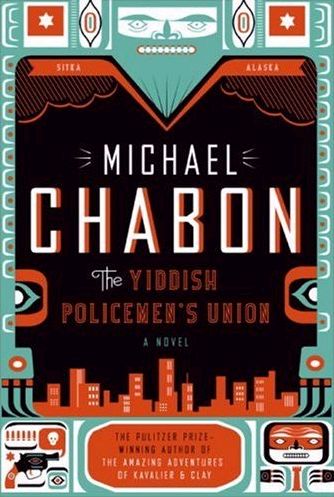
The Yiddish Policeman’s Union: Michael Chabon: Book Review

It’s not very often that I read a book that I just don’t like very much.  The back cover of Michael Chabon’s The Yiddish Policeman’s Union is replete with admirable praise for the work using words like “awesome, breathtaking, dazzling” to describe the novel. While I can appreciate the narrative strength and the alternate history of the settlement of Jews in Sitka Alaska and the threat of their imminent eviction from the territory, the book took so many twists and turns that I just lost interest at times. Continue reading

Leave a comment

Filed under Book Reviews

The Most Beautiful Book in the World: Eric-Emmanuel Schmitt Book Review

The Most Beautiful Book in the World by Eric-Emmanuel Schmitt is quite simply a delightful collection of 8 short stories each one focused on the life of a woman. Translated from French into English most of these stories take place in France. When I had first heard the title of the collection I had jokingly said only a Frenchman would write a book with such a grandiose title.

But this collection turns those kinds of cynical suppositions on its head. In fact, The Most Beautiful Book in the World  refers to the last story in the collection where  women  imprisoned in a Russian gulag collectively write a book for their daughters on cigarette paper with a stolen hidden pencil.

Each story  deals with an issue in life whether it be senility, finding or losing love, secrecy, the gift of joy or the pain of loss.  I’m not sure if this is because I’m a modern girl or just a cynic at heart but each story always held me at the precipice of cynicism but ultimately led me to an entirely different and wonderfully inspiring place altogether. To accomplish this without yielding to saccharine predictability is a gift.

The writing was different as well. I’m not sure if this is because the work is a translation or because this is the way Schmitt writes but each story has this almost old world, parable feel to them that lends them an oddly timeless quality. Schmitt says he wrote the stories ‘when he was forbidden to write’ during the filming of Odette Toulemonde (also the title of one of my favourite stories in the collection) . But the fact that these are not polished literary gems a la Alice Munro, is also what adds to their charm. Reading these stories is like sitting down to a mid-day snack of excellent french bread, cheese and wine served on a rough hewn table. I loved The Most Beautiful Book in the World.

1 Comment

Filed under Book Reviews

The Guernsey Literary and Potato Peel Pie Society

The Olympics seem to have robbed me of any reading momentum I had toward my impossible goal of reading 100 books this year. That plus the fact that I’m reading F. Scott Fitzgerald’s This Side of Paradise which I’m slogging my way through like mud in a World War one trench. Where’s People magazine when you really need it? Anyways, some time ago, I did start and then put down The Guernsey Literary and Potato Peel Pie Society. An improbable title which has taken some commitment on my part to memorize not unlike the numbers I am trying to learn in Spanish. Continue reading

4 Comments

Filed under Book Reviews

Mansfield Park: Jane Austen Book Review

Jane Austen’s Mansfield Park is a wonderful study of human folly and caprice set amidst the studious manners and social hierarchy  of early 19th century small town English gentry.  If a novel that was written almost two hundred years ago sounds and feels like a foreign place (and believe me, it does, I mean how did they keep those castles heated for god’s sake) Austen’s keen eye for the flaws that make us human are very familiar.

Enter Fanny Price,  a young beautiful morally steadfast and virtuous girl who is taken in by her wealthy uncle  and his family so she can be afforded greater opportunity in life. Uncle Tom’s family, of course,  by virtue of possessing both wealth and  beauty, are by the measure of the time, morally and socially superior to the steadfast  Fanny Price.

The Bertram daughters are cossetted and spoiled by their Aunt Norris who obsequiously panders to their every whim and folly. When (not surprisingly)  the young ladies grow up to be of dubious moral fibre and bring shame on the Bertram name through their romantic misadventures and shenanigans, it becomes obvious to the outsider that wealth and beauty alone cannot sustain the moral order.

You could probably write a masters thesis (no doubt somebody has ) on the innumerable  transactions that take place within the cast of characters in Mansfield Park that are designed to illuminate the slippery slope of moral turpitude. The great thing about Jane Austen’s world, is that if you make the right choices, your rightful place in love and society is assured.

Fanny for example, consistently resists the offer of marriage by Henry Crawford. She witnesses first hand his careless flirtations with the Bertram sisters and sees this as irrefutable evidence of a deeply flawed character. Regardless of his money and station in life, she can never marry him, even if it means she can attain a station in life far above anything she could ever have hoped for.

Henry, on the other hand, through this single flaw, will never find the real happiness he seeks. He can love Fanny and know that she is the best he can ever have but his vanity lead him to his ultimate downfall. He may have wealth and position, but he will never have love.

Edmund, on the other hand, who is Fanny’s cousin (and son of the wealthy uncle) doesn’t seek wealth and seeks only love. Even though he is misguided in his search for love when he falls for the charming but flighty Mary Crawford (sister to the morally bankrupt Henry) he ultimately finds redemption and real love with Fanny.

This book isn’t going to be for everyone, especially not Dave or readers of his ilk, but I thought this was a fun and interesting read. It took me some time to get used to the ornate use of language but I got used to it quite quickly and found that it gave me something even more to think about which is the changing nature of language.

My next book is contemporary but then I think I’ll take a dive into Dicken’s A Tale of Two Cities.

2 Comments

Filed under Book Reviews

Loving Frank: Nancy Horan Book Review

I don’t usually read historic fiction but I picked this up as a recommendation from my sister. Nancy Horan is a writer and journalist who spent most of her life in Oak Park, Illinois, where Frank Lloyd Wright had lived for many years and created a notable architectural legacy. As she became interested in Frank Lloyd Wright’s life she learned of his love affair with Martha (Mamah) Borthwick Cheney, the wife of one of his clients, with whom he had  run off to Europe, leaving behind 8 children between the two families.

Although a great deal is known of Frank Lloyd Wright, very little was known of Mamah Cheney.  Horan had done quite a bit of research with secondary resources, but she  was able to more fully flesh out Mamah Borthwick’s character when several of her letters were found.

What Nancy Horan delivers is a very even- handed and beautifully compelling story of the love between two people, who defy social convention so that they may be together.

Under Horan’s expert hand  Mamah Borthwick comes to life as a very conflicted, passionate and intellectual woman who follows her heart.  A highly educated feminist  who speaks several languages, she is in every way an intellectual match for the eccentric, brilliant and egotistical Frank Lloyd Wright.

While women today have many opportunities that Mameh couldn’t possibly have imagined, the feminist dilemna that frames this story is still very relevant today. How do you balance your own intellectual and emotional needs with a happy and fulfilling family life? Can you follow your emotional and intellectual dreams and be happy in family life? Is it moral and right to stay in a loveless marriage for the ‘sake’ of the children? Can you be a good parent if you’re not personally fulfilled? Should children come first? These are all questions that Mameh faced each and every day of her life and which hounded her both publically in the  press and privately.

Yet, she remained true to herself and to a love that she felt was one of the only authentic things in life. She struggled daily with her choices and yet you don’t imagine for one moment that she could have lived her life any other way.  This is a compelling but difficult story.

The bonus in this book, is of course, that the man she has fallen in love with is Frank Lloyd Wright and the book fleshes out his character and the life and times that fuelled his vision of form. He was a difficult guy to love. Egotistical, brilliant, flamboyant, a terrible businessman who rarely paid his bills on time, he was selfish and driven. But he had a remarkable vision of beauty and form that changed the course of American architecture.  And  he also loved Mameh Borthwick with his heart and soul.

” Mamah and I have had our struggles , our differences our moments of jealous fear for our ideals of each other – they are not lacking in any close human relationship – but they served only to bind us more closely together. We were more than merely happy even when momentarily miserable…Her soul has entered mine and it shall not be lost.”

When great art and great love forms itself against convention there is a price to pay and the price is often steep.  In this kind of tale, it seems to me, there is no right and wrong although society certainly does/did its fair share of condemnation. I think Mamah Borthwick made some very tough choices for which she paid dearly. But she lived a life that was authentic to herself.  I thought this was a really interesting book that is as relevant to women’s issues  today as it was during Mamah Borthwick’s time. Nancy Horan brought to life a remarkable man and woman and their love story.

Nancy Horan has a web site that is an excellent resource for anyone wanting to know more about the characters or how the book came to be written. http://www.nancyhoran.com/

1 Comment

Filed under Book Reviews

A Fraction of the Whole: Steve Toltz Book Review

Dave’s turn: A Fraction of the Whole is narrated by Jasper Dean who tells us the story of  his overanalyzing, philosophical, paranoid father, Martin and his deceased master criminal uncle, Terry. As he tells us of the events that led to his father’s demise, he recounts a boyhood of outrageous schemes and unwanted adventures.

The story starts in an Australian prison cell but travels to the cafes of Paris, through Thai jungles to strip clubs, asylums, mazes and criminal lairs. The result is a non stop diatribe- for and against- politics, family, love, relationships, religion and humanity.

Throughout the story we are witness to Jasper’s constant struggle with his relationship with his father. Not knowing from one moment to the next if he loves, hates or is going to murder him. And although we get the sense that he wants to leave (after Jasper reads, in one of his fathers many journals, that he is thought of as nothing more than a premature reincarnation of his father)  to form his own identity, there is the constant inner struggle of how, or in fact if he truly wants to. I thought this was an interesting insight that explores the sometimes tumultuous relationships we sometimes can have with our own parents.

I found Steve Toltz’s writing style, philosophical ramblings and play on words more enjoyable than the story itself, which can get a little flat at times. I found myself re-reading and underlining (then suddenly realizing I had borrowed the book) certain brilliant and hilarious observations on our existence. This book has made me really think about my own life and world around it and has made me want to read more philosophy. I feel when a book has this affect it has done it’s job. I look forward to Toltz’s next writing.

Leave a comment

Filed under Book Reviews