Poem of the Week: What If the Hokey Pokey Really Is What It’s All About? by Mark Kraushaar via Poetry Mistress Alison McGhee

What If the Hokey Pokey Really Is What It’s All About?
– Mark Kraushaar

You put your right foot in,
            You put your right foot out … ,
            That’s what it’s all about.

            —The Hokey Pokey, Larry LaPrise, 1948

Of an evening filled with wide-set
bright stars I think of my friends, Ray, Sara,
Father Hay, and Phil and Joe.
I think of them together and I think of them alone:
Friends, what better than to put your right foot in,
and what better than to take it out again?

What better than to leave your jacket
and your drink and join
the circled strangers on the floor?
What better than to put your left foot in
and then to take it out since
who’ll explain this strange life anyway,
the problems with love, the trouble with money?
It must be what is meant, this must be what’s intended.
What better than to leave your silent trying behind
and put your right foot in once more
then shake it all about?
What better than having said too little
or too much you join the farmer with his wife
and daughter, the couple with their
squeaky walkers, the FedEx man,
the florist and the LPN?
It must be what is meant,
this must be what it’s all about:
what better than to join the high-heeled,
high-haired waitress first pausing and laughing,
then leaning to her friend the grinning busboy
who, putting his elbow in then out again,
now shakes it all about.

For more information on Mark Kraushaar, please click here.

For Poetry Mistress’ Facebook page.

Leave a comment

Filed under Poem of the Week

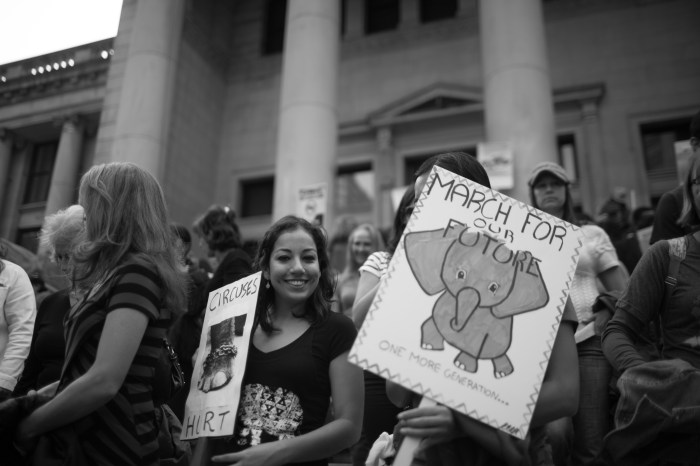
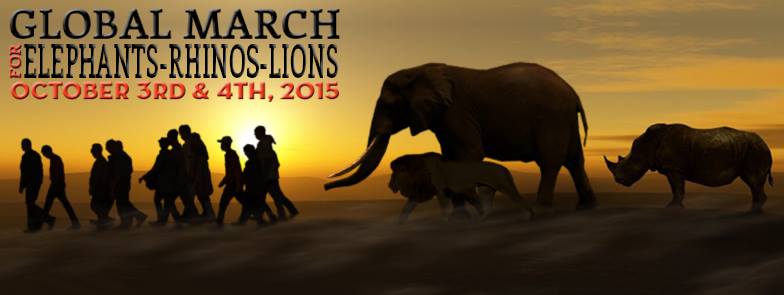
Global March for Elephants and Rhinos Oct 3 & 4 2015

10374982_10153053363255358_1265353712870345524_n

I am an animal lover and an advocate for species at risk.  I have pledged to raise awareness and funds for elephants and rhinos. I advocate on behalf of elephants and rhinos who are poached, elephants who are enslaved in entertainment or in horrific conditions as working animals. (Asian Tourism, circus elephants).

I am also the co-organizer for the second annual Global March for Elephants and Rhinos on October 3rd, 2015. I am grateful for my co-organizers Fran, Andrea, Jake and Christine at Elephanatics who have jumped into the madness with me along with the growing number of incredible volunteers, not the least of whom is Dave who works tirelessly for animals.

Please find a city near you or better yet organize a march in your city! Without our help, without a global effort these two species face extinction.

  • Last year 137 cities, and over 50,000 people marched. Let’s double it this year. Let’s scream and yell and make our voices heard. Let’s change this outcome for these animals. Come on. Let’s do it.
  • Last year 35,000 elephants were poached, 100 a day, or 1 every 15 minutes. There is a growing market for ivory from China with the US being the second biggest market for ivory. Political instability and terror groups use ivory to fund their activities. Ivory is now worth more than gold. Poaching is wreaking havoc on elephant populations and on communities.
  • Less than 100 years ago 5 million elephants roamed Africa. 90 percent of them are now gone. On our watch.
  • Rhino horn is prized for its “medicinal” properties. The Whole World is Just Left with 27,431 Rhinos. Updated stats can be found here.
  • Ivory funds terrorism. Elephants and rhinos cannot fight the war that is being waged against them without our/your help.

You can find out more about the Global March for Elephants and Rhinos right here. Find your city and join the many others who are lending their time and effort to speak up on their behalf.

Here are some pictures from last year’s march.

The Vancouver march will be held at the Vancouver Public Library North Plaza from 12:00 pm to 2:00 om Saturday October 3rd. Join us.  These guys need all the help they can get. We’ll have music, speakers, face painters, cool stuff for sale and of course we’ll sign petitions and make as much noise as we can so the world hears and responds to this urgent issue.

Join the Vancouver march here.

Find your city here.

Photos
2-marchers

marchers-1

youth-march

4 Comments

Filed under Animal Activism

Ted X – Steven Wise on why chimps should have legal person status – Non Human Rights Project

This is an extraordinary Ted X presentation by Steven Wise founder of the Non Human Rights Project on why chimpanzees ‘(and other animals) legal status needs to be changed from ‘thing’ to ‘person’. For those of us who love animals and understand their voicelessness at the hands of people, this talk represents a sweeping step in the right direction.

“Chimpanzees are people too, you know. Ok, not exactly. But lawyer Steven Wise has spent the last 30 years working to change these animals’ status from “things” to “persons.” It’s not a matter of legal semantics; as he describes in this fascinating talk, recognizing that animals like chimps have extraordinary cognitive capabilities and rethinking the way we treat them — legally — is no less than a moral duty.”

1 Comment

Filed under Animal Activism

Poem of the Week by Osip Mandelstam via Poetry Mistress Alison McGhee

The Necklace
– Osip Mandelstam (1920, translated from the Russian by Christian Wiman)

Take, from my palms, for joy, for ease,
A little honey, a little sun,
That we may obey Persephone’s bees.

You can’t untie a boat unmoored.
Fur-shod shadows can’t be heard,
Nor terror, in this life, mastered.

Love, what’s left for us, and of us, is this
Living remnant, loving revenant, brief kiss
Like a bee flying completed dying hiveless

To find in the forest’s heart a home,
Night’s never-ending hum,
Thriving on meadowsweet, mint, and time.

Take, for all that is good, for all that is gone,
That it may lie rough and real against your collarbone,
This string of bees, that once turned honey into sun.

A big thanks to Alison for curating these lovely gems.


​For more information on Osip Mandelstam, please click here: ​http://www.poetryfoundation.org/bio/osip-mandelstam

Leave a comment

Filed under Poem of the Week

The Circus is In Town – Stop Animal Performances

 CEmIKM0W8AAN99M

The Circus Is Coming to Your Town

Find out why a growing number of countries, cities and provinces have banned Wild Animal Circuses

Increasingly, countries, provinces and cities all over the world are banning the use of animals, both domestic and wild, for entertainment purposes such as circuses.  Bolivia deserves a round of applause for being the first country to implement such a ban.  Other countries following suite include Australia, Austria, Peru, Greece, Hawaii, Cyprus, Paraguay, Columbia, the Netherlands and Slovenia.

The following Canadian provinces and cities have also banned circuses with wild animal performances: multiple cities in British Columbia, Newfoundland, Nova Scotia and one or two cities each in Ontario and Quebec. Find a complete listing here.

While there are still some communities that still welcome these live animal shows the truth behind animal entertainment is extremely distressing.

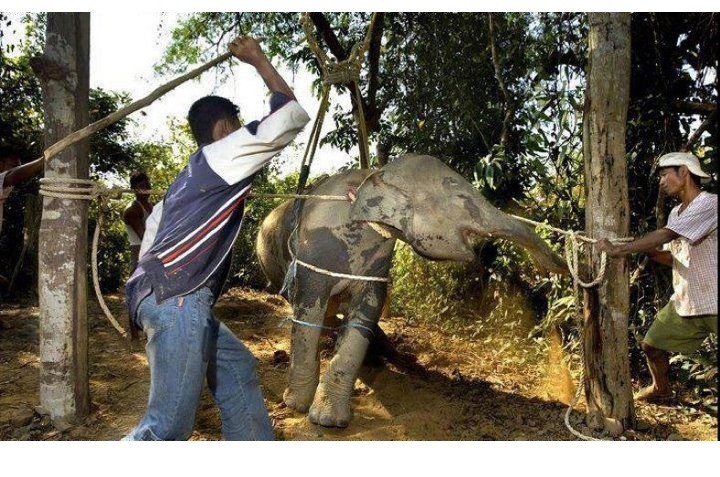
For instance, a performing elephant is broken as a baby after being torn from its family.  To “break” an elephant, it is tied, beaten and starved for weeks until it becomes fearful and submissive of humans.  Once it is broken, its continued submission is ensured through the ever present bull hook and stun guns.

The circus coming to your town, owned and run by Tarzan Zerbini has a lengthy list of USDA (US Department of Agriculture) violations. Please find this list here.

Elephants live the same life span as humans and are known to be one of the most intelligent and emotionally complex animals in the world. They share important family bonds, grieve and are playful. They are very much like humans except they’re elephants,

Travel for long periods of time in extremely small quarters and forcing wild animals to perform even under the best of conditions is inherently cruel. Cirque du Soleil is an example of 21st century circus that entertains without abuse and the enslavement of wild animals.

Even without these violations the life of performing wild animals is based on terror and submission and includes social isolation, forcing animals to perform unnatural tricks which it’s body is not designed to do (elephants have no need to ride bicycles in the wild) which results in frequent and chronic injury.

Many performing animals are now retired to sanctuaries such as PAWS where the Toronto Zoo elephants were sent or The Elephant Sanctuary in Tennessee.

When this circus or any other circus with wild performing animals comes to your town, please tell the “other “story behind the circus and follow the lead of other cities and countries and ban wild animal performances in your city.

About Schell and Marie – Tarzan Zerbini elephant performers

The elephants you will see at this circus (also run under Royal Canadian Circus, Shrine or Tarzan Zerbini Circus) are Schell, who is 50, and Marie who is 42. Marie can be distinguished by the light-coloured bands on the edges of her ears. Marie is also the one who has been observed to have foot problems and sometimes it is obvious in her gait. They have worked all of their lives. They are now arthritic and very slow-moving and SHOULD be retired.

These are the tour dates for these animals who travel is small cramped trailers and who then spend most of the rest of the time standing in parking lots. These were once wild animals who roamed for kilometres per day.

May 1 – 3 Red Deer, AB Tarzan

May 6 – 7 Fort McMurray, AB Royal

May 9 – 18 Calgary, AB Royal

May 20 Medicine Hat, AB Royal

May 22 – 24 Lethbridge, AB Royal

May 29 – 31 Regina, AB TZ

Jun 5 – 7 Prince Alberta, AB TZ

Jun 12 – 14 Saskatoon TZ

Jun 19 – 21 Hamilton/Ancaster, ON * Shrine

Jun 26 – 28 Barrie, ON Shrine

Jun 29 Orillia PRIVATE?? TZ

Jul 1 – 12 Markham, ON Shrine

Jul 17 – 19 Brampton/Caledon, ON * Shrine

Jul 21 London/Dorchester, ON * Shrine

Jul 24 – 26 Winsor, ON Shrine

Jul 31 – Aug 3 Milton, ON Shrine

Aug 5 Brockville, ON Shrine

Aug 7 – 9 Ottawa, ON Shrine

This is just their Canadian tour schedule. Their full schedule is here. These elephants will cross the continent twice (20,000 kilometres) and spend over 250 hours in a trailer. They do this year after year. Would you do this to your dog?

Resources:

Ottawa Humane Society – The Elephant in the Room

SPCA

ZooCheck

Ringiing Brothers Animal Abuse

Life of Circus Animals

What you can do:

  1. Call your City or Municipal Hall and find out if Council is considering a by-law to ban circuses that have performing wild or exotic animals.
  2. Fax a letter to the mayor expressing your concern about the community supporting acts that abuse animals. Copy your letter to the SPCA or local humane group.
  3. Write a similar letter to the media. Don’t hesitate to send your letter to the editor of both daily and community papers expressing your point of view.
  4. Join or start a committee, perhaps working with the SPCA or local humane group, whose goal is to implement a campaign to convince Council to adopt a by-law against the use of wild/exotic animals in performing venues.
  5. Don’t attend a circus with performing animals – only attend animal-free circuses.
  6. Share their story as much as you can.
3 Comments

Filed under Animal Activism

Poem of the Week: R&R by Brian Turner via Alison McGhee Grand Mistress of Poetry

The curve of her hip where I’d lay my head,
that’s what I’m thinking of now, her fingers
gone slow through my hair on a blue day
ten thousand miles off in the future somewhere,
where the beer is so cold it sweats in your hand,
cool as her kissing you with crushed ice,
her tongue wet with blackberry and melon.
That’s what I’m thinking of now.
Because I’m all out of adrenaline,
all out of smoking incendiaries.
Somewhere deep in the landscape of the brain,
under the skull’s blue curving dome—
that’s where I am now, swaying
in a hammock by the water’s edge
as soldiers laugh and play volleyball
just down the beach, while others tan
and talk with the nurses who bring pills
to help them sleep. And if this is crazy,
then let this be my sanatorium,
let the doctors walk among us here
marking their charts as they will.
I have a lover with hair that falls
like autumn leaves on my skin.
Water that rolls in smooth and cool
as anesthesia. Birds that carry
all my bullets into the barrel of the sun.

​For more information on Brian Turner, please click here: http://www.poetryfoundation.org/bio/brian-turner​

Leave a comment

Filed under Poem of the Week

Poem of the Week: The Rider by Naomi Shihab Nye via Alison McGhee

The Rider

A boy told me
if he roller-skated fast enough
his loneliness couldn’t catch up to him,
the best reason I ever heard
for trying to be a champion.
What I wonder tonight
pedaling hard down King William Street
is if it translates to bicycles.
A victory! To leave your loneliness
panting behind you on some street corner
while you float free into a cloud of sudden azaleas,
pink petals that have never felt loneliness,
no matter how slowly they fell.

A big thanks to Alison – the person responsible for finding these beautiful poems and who graciously shares them.

​For more information on , please click here​: http://www.poets.org/poetsorg/poet/naomi-shihab-nye


My blog: alisonmcghee.com/blog

My Facebook page.

Leave a comment

Filed under Poem of the Week

Thailand Day 3 – Tourists Create the Demand – Koh Tao

Guest post: Leanne Fogarty

I did my scuba certification on Koh Tao nine years ago. Now I can’t believe how over-run it has become. Precious memories of a spiritual, soulful paradise are bombarded by 20 taxi drivers shouting at you for your patronage. Is it us or the Thai who created this decline? Not a difficult question given that most Thai are relatively poor and need to etch a living wherever they can. Likewise it’s easy to resent the “inhumane beasts” that would torture a baby elephant.

But WE created that demand in the market. It’s US who are willing to pay ludicrous sums so we can get our perfect Facebook shot atop an elephant or cuddling a tiger. They are just giving us what we want and food and clothing to their family. One shouldn’t be quick to judge. I’m not excusing the “phajaan” by any means, but if we were no longer so privileged, would we not bend some of our morals so our family could survive?

Being a mahout (person looking after the elephant day-to-day) is not a well-paid vocation in Thailand. Often they are not the actual owners who reap the benefit of our limitless dollars. They are just trying to make it from one day to the next. It isn’t as black and white as it seems.

Leave a comment

Filed under Animal Activism

Thailand Day 2- The Dark Side of Elephant Tourism

Guest post by elephant ambassador Leanne Fogarty currently traveling in Thailand.

Day 2 – Bangkok

The bus/catamaran to Koh Tao leaves at 6am so given my midnight arrival last night I decide to get a decent sleep and

spend one day in Bangkok. Two years ago I volunteered at ENP and became an Elephant Ambassador. That means we

tell people the dark side of elephant tourism that most visitors have no idea about. At ENP we learnt how tourism

elephants are not domesticated, but tortured into submission. They are plucked from the wild between 2 – 4 years of

age, still dependant on their mother’s milk. The baby’s mother and aunties were most likely slaughtered in the capture

as they tried valiantly to protect their precious infant. The baby is then placed in a tight wooden contraption, only just

big enough for itself, but not large enough for it to turn around. Over the next 3 – 10 days, depending on how strong

willed the elephant is, it is beaten with sticks, stabbed with bull hooks, starved, dehydrated, deprived of sleep and

screamed at. The “phajaan”, literally the “breaking” (of its wild spirit) is a centuries old practice in many countries with

elephants.

An ele never forgets this trauma, and years later, just the sight of the bull hook is enough to make it obey, even to the

point of exhaustion, severe pain and mental anguish. An Ele Ambassador educates people about the cruelty and

isolation eles suffer, just so we can cross off one of our bucket list items. I say “we” because I too rode and elephant

before I knew what was involved. Ambassadors also provide a list of places in 5 Asian countries where you can have a

non-riding, positive elephant experience. Feeding and swimming with a happy, healthy elephant is far more exciting

than a jerky, one-hour ride where you can only just see the back of its scarred head.

Part of the “Phajaan” process involves hitting the elephant with long sticks that have sharp nails on the end.

phajaan

Just one part of the horrific “Phajaan” process involves hitting the elephant’s sensitive areas (like its face and trunk) with long sticks that have sharp nails on the end. Source: unknown.

List of elephant sanctuaries by country.

Leave a comment

Filed under Animal Activism

Guest post – Elephant Tourism: Travels in Thailand with Leanne Fogarty

The following guest posts are written by Leanne Fogarty, an elephant ambassador and advocate as she travels through Thailand.

Day 1 – Arrival

Finally. Nineteen hours, 11,800 km and now I am in Bangkok. I have 2 weeks in Thailand. One week in beautiful Koh Tao (Turtle Island) and one week volunteering at an elephant freedom project in Surin. The Surin Project is run by the Save Elephant Foundation – better known for its Elephant Nature Park near Chiang Mai. The ENP cares for 42 injured, old,or formerly abused elephants from the logging and tourism industries. Volunteers stay for a week or more, working for the “chang” (elephants) instead of the other way around. The volunteer’s donations fund the huge costs of providing medical care, a healthy, varied diet and hundreds of acres for the eles to roam. In the wild elephants can walk 24km a day. There is no elephant riding at ENP. The volunteers plant food for the eles, harvest and cut up the food, pick up dung, wash and play with the eles in the river, and walk beside them. Basically the Park lets eles – finally – BE eles.

As soon as I retrieve my bag and head for the exit, 3 huge anti-ivory posters block my path. Impressive! So it IS true. Thailand is working on its contribution to the poaching crisis. Let’s hope it also becomes sensitive to the abuse of its elephants in the name of entertainment and the mighty tourist dollar.

The warning signs at Bangkok airport. Source: Leanne FogartyThailand airport

Leave a comment

Filed under Animal Activism