Category Archives: Book Reviews

Poem of the Week: Our Fathers by Joyce Sutphen via Poetry Mistress Alison McGhee

Our Fathers
     – Joyce Sutphen

Our fathers, who lived all their lives on earth—
are going now. They have given us all
we need, and when we asked, they gave us more.

Their names are beautiful to us, holy
as the names of stars, as familiar
as the roads we traveled, falling asleep

on the way from one farm to another.
Their kingdoms were small; they were never
interested in more than one homestead,

and as for evil: although they could not
keep it from us, they tried to keep us from
temptation, though we were like all children

and wanted our own power and glory,
world without end, forever and amen.


For more information on Joyce Sutphen, please click here.

Thanks always to Alison for curating and sharing these beautiful word sculptures.Visit her web site here. https://alisonmcghee.com/

Leave a comment

Filed under Book Reviews, Poem of the Week, Uncategorized

A Woman in Berlin – by Anonymous

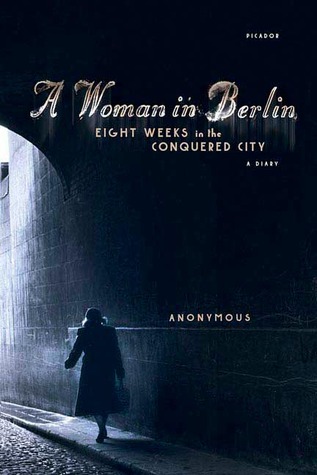
30851I am on a mission to learn about the Second World War. Not about generals and strategy  but about the people who lived and survived it.  Primo Levy’s book Survival in Auschwitz was a great book. An incredible story that demonstrates just how damn hard it is to survive.

A Woman in Berlin is no different. It’s written by a journalist who chronicles what happens to the people in her  apartment block (including herself) over two months at the end of the war when the Russians are beating down on the city.

Through the framework of her apartment block she shows you the minutiae of war. Who are the people hiding in cellars, what are they eating, wearing, where does water come from, what is the daily, hourly, minute by minute search for food like, where is her neighbour’s husband, where is her boyfriend, what is the news from the front, where is Herr Hitler and his group of bandits now? Do Nazis walking the street, knowing that defeat is imminent, still feel comfortable declaring their party status? What is the news from the concentration camps, thousands upon thousands dead she hears. There is no news service, no electricity, no running water ,no heat. It’s cold and miserable. She’s moved in with her neighbour and sleeps with a Russian officer to keep fed, does this make her a whore? She is raped, her neighbour is raped. She is raped again and then again. And it’s vital that she find protection through an officer who sings drunken Russian songs, whispers secrets in her ear, longs for love, brings her food which she shares. This makes her of value to her neighbour. It keeps her alive.

The Russians occupy the city breaking into apartments and homes. And when nightfall they help themselves to everything. This story is no picnic. Yet what makes it compelling is its utter lack of sentimentality. The chronicler of this story doesn’t feel sorry for herself, she eyes the world around her with an intelligent, sardonic eye. She uses the Russian she sleeps with to her advantage. She’s kind and funny. But she is not sentimental. She doesn’t feel sorry for herself. Perhaps not even for others. She witnesses the ravages of war in all its  human mundanity.

I was sad when this book ended. I wanted to talk to this person all night long and drink whiskey. Undoubtedly we’d have some laughs at the folly of men, of political rogues and  at the strangeness and cruelty of the  upside down world. She is as contemporary as anyone I know. There is a universality about her writing that seems so specific to her. I’m in love.

Sometimes people ask “Who would you spend an evening with? ” I would spend an evening talking to this woman any time.

3 Comments

Filed under Book Reviews, Uncategorized

Poem of the Week: Aimless Love by Billy Collins via Poetry Mistress Alison McGhee

Aimless Love
– Billy Collins

This morning as I walked along the lakeshore,
I fell in love with a wren
and later in the day with a mouse
the cat had dropped under the dining room table.
In the shadows of an autumn evening,
I fell for a seamstress
still at her machine in the tailor’s window,
and later for a bowl of broth,
steam rising like smoke from a naval battle.
This is the best kind of love, I thought,
without recompense, without gifts,
or unkind words, without suspicion,
or silence on the telephone.
The love of the chestnut,
the jazz cap and one hand on the wheel.
No lust, no slam of the door –
the love of the miniature orange tree,
the clean white shirt, the hot evening shower,
the highway that cuts across Florida.
No waiting, no huffiness, or rancor –
just a twinge every now and then
for the wren who had built her nest
on a low branch overhanging the water
and for the dead mouse,
still dressed in its light brown suit.
But my heart is always propped up
in a field on its tripod,
ready for the next arrow.
After I carried the mouse by the tail
to a pile of leaves in the woods,
I found myself standing at the bathroom sink
gazing down affectionately at the soap,
so patient and soluble,
so at home in its pale green soap dish.
I could feel myself falling again
as I felt its turning in my wet hands
and caught the scent of lavender and stone.


For more information about Billy Collins, please click here.

Thanks to Alison for finding and sharing these gems. Check out Alision’s


Leave a comment

Filed under Book Reviews, Uncategorized

Primo Levi: Survival in Auschwitz

I’m working on a writing project which requires me to become more educated with the events and history of the Second World War.The life of my mother and father, teenagers during the war,  and one of my best friends, a child of the 1938  Kinder-transport to England and Ireland, have been a backdrop to my own life. As I discover more about their lives I have become deeply interested in the cultural, historic and political drivers of those times. I am also interested in the every day lives of people and how lives were shaped against the backdrop of such cataclysmic, global horror.

My husband Dave recommended Primo Levi’s book Survival in Auschwitz. It’s fair to say that many books push me towards a nice dull slumber when I read before sleep, this one, however, did not and I lay awake thinking into the dark of the night while reading it.

The story is about Primo Levi, a twenty-five year old  Italian chemist who was captured by Italian Fascists and deported from Turin to Auschwitz.  Anyone who has taken a history class or knows anything about the Second World War, of course, knows that 6 million Jews were killed in camps during the war. It’s when you read the autobiography of someone to whom this has happened that the brutality of this war drives home deeper and further into  the darker corners of your heart.

From being moved to the work camp in Northern Italy to the arrival of the cargo trains where Levi and thousands of others were transported like cattle to Auschwitz, the reader is taken step by step on Primo’s journey of dehumanization.

Upon arrival they were stripped of their clothing, their heads shaved, rags handed to them, and families forever separated. The back breaking senseless work they were forced to do, the bone chilling cold and starvation rations ended millions of people’s lives and divided the camps between those who were willing to survive at any cost.

Primo talks about the promise that many people of his city (Turin) made upon their arrival at the camp to continue to try and meet to uphold morale. This ended after only weeks as few survived the backbreaking conditions or the ‘selections’ to extermination camps.

Primo survives the war and as he points out, the mystery to his survival included a great deal of luck and the kindness of a stranger who helped to augment his rations.

This is a dark, very well written story. When I look around at these uncertain times – thousands of displaced refugees, the desire to build walls, hatred and suspicion of anyone different, deeply institutionalized racism, I think to myself, wow, let’s all read history. Let’s soak it up. Let’s never, ever forget where this leads us.

 

3 Comments

Filed under Book Reviews, Uncategorized

Books: The Paying Guests – Sarah Waters

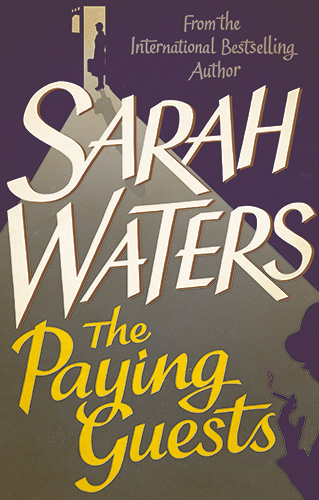
9780349004365Why mince words I loved this book. From the opening page you’re drawn into this lovely world of 1920’s London and the lives of a mother and grown daughter whose circumstances are forever changed by the Great War.
To make ends meet they rent out rooms in their their grand old house to a young couple or ‘paying guests’ . Although awkward at first, a relationship quickly develops and before you know it the old house comes to life again with a steamy, illicit, passionate love affair.

Of course, illicit affairs are the stuff of real life and fiction. I think what makes this one unique is that it explores illicit love amidst the backdrop of changing moral fabric. The old world where women played prescriptive roles was changing. The Edwardian sensibility was fading against the rise of the middle class and the collapse of the old social genteel order. When the Barbers, a rough and tumble young couple (he’s an insurance broker, she a stay-at-home wife of questionable class) move in, their relationship with Frances and her mother becomes a microcosm of the new social order that is emerging.

This all sounds very academic but what this book is, is an extraordinary romp that’s well executed on multiple levels.  Without giving too much away I would say that the book is also a study in the slippery slope of moral indiscretion where one act begets another and before you know it,your characters are far away from who they thought they were or hoped to be. Another great read! I loved it and look forward to reading other books by the talented Ms. Waters!

1 Comment

Filed under Book Reviews, Uncategorized

Books: The Girl on the Train

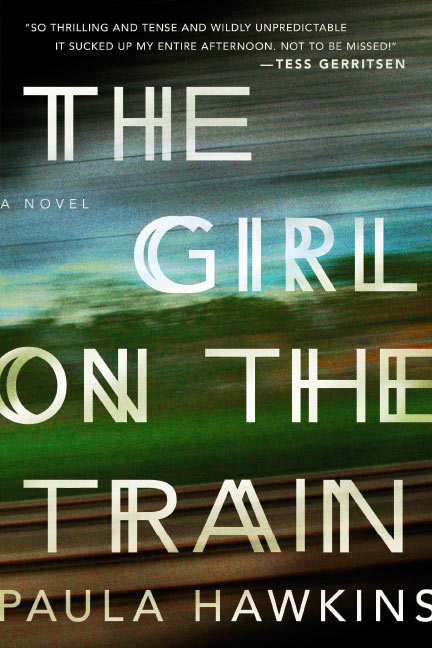
The_Girl_on_the_TrainThe jacket copy on The Girl on the Train by Paula Hawkins says you won’t be able to put this book down and I didn’t. Not once. I read it straight through even though the characters are almost all horrible non-likable people. But there is something incredibly readable about this book that keeps you turning page after page. That’s a good story teller at the very least.

Rachel, the main character, is a bit of a blubbering drunk who has lost control of her life and lives it vicariously through others. Every day she commutes to London and she passes a series of houses which she has become quite familiar with. So familiar, in fact, that she feels she has come to know one couple in particular. Then one day she witnesses something disturbing and she goes to the police and becomes inextricably entangled in the disappearance of a woman.

And voila you have the makings of a classic murder mystery plot! What I find interesting about this book is the exploration of memory loss as a result of drunken black-outs. Our main protagonist’s memory is unreliable because she’s a drunk and has difficulty recounting the details of an event, and often can’t remember the event itself. So part of the book deals with her struggle to piece together details of the incident and as well as of her own life.

The other theme that runs through this book is the issue of domestic violence and the politics of power in male female relationships.  It doesn’t paint a pretty picture and certainly some of the issues she touches on would be familiar to most of us which brings relationship politics uncomfortably close to home. Last but not least at the centre of a good murder mystery is the fact that people aren’t all that they portray themselves to be. In The Girl on the Train nobody really is what they portray themselves to be. How well can you ever know know someone? This book explores this theme and the result is CREEPY. This a great quick read. I found myself going back after I finished reading it trying to pick up clues that the writer left as crumbs in each chapter. Good read!


Leave a comment

Filed under Book Reviews, Uncategorized

Poem of the Week:For a Dying Tomcat Who’s Relinquished His Former Hissing and Predatory Nature

I remember the long orange carp you once scooped
from the neighbor’s pond, bounding beyond
her swung broom, across summer lawns

to lay the fish on my stoop. Thanks
for that. I’m not one to whom offerings
often get made. You let me feel

how Christ might when I kneel,
weeping in the dark
over the usual maladies: love and its lack.

Only in tears do I speak
directly to him and with such
conviction. And only once you grew frail

did you finally slacken into me,
dozing against my ribs like a child.
You gave up the predatory flinch

that snapped the necks of so many
birds and slow-moving rodents.
Now your once powerful jaw

is malformed by black malignancies.
It hurts to eat. So you surrender in the way
I pray for: Lord, before my own death,

let me learn from this animal’s deep release
into my arms. Let me cease to fear
the embrace that seeks to still me.


For more information on Mary Karr, please click here.

Leave a comment

Filed under Book Reviews

Poem of the Week: Flossie at School by Alden Nolan via Poetry Mistress Alison McGhee

Flossie at School
     – Alden Nowlan

Five laths in a cotton dress
was christened Flossie
and learned how to cry,
her eyes like wet daisies
behind thick glasses.

She was six grades ahead of me
and wore bangs; the big boys
called her “The Martian,”
they snowballed her home,
splashed her with their bicycles,
left horse dung in her coat pockets.

She jerked when anyone spoke to her,
and when I was ten
I caught up with her one day
on the way home from school,
and said, Flossie I really like you
but don’t let the other kids know I told you,
they’d pick on me, but I do like you,
I really do, but don’t tell anybody.
And afterwards I was ashamed
for crying when she cried.


For more about Alden Nowlan, click here.
Alison’s Facebook page.

Leave a comment

Filed under Book Reviews, Dave's Pictures and Ma Movies, Poem of the Week, Uncategorized

Wild Geese: A poem by Mary Oliver

You do not have to be good.
You do not have to walk on your knees
For a hundred miles through the desert, repenting.
You only have to let the soft animal of your body
love what it loves.
Tell me about your despair, yours, and I will tell you mine.
Meanwhile the world goes on.
Meanwhile the sun and the clear pebbles of the rain
are moving across the landscapes,
over the prairies and the deep trees,
the mountains and the rivers.
Meanwhile the wild geese, high in the clean blue air,
are heading home again.
Whoever you are, no matter how lonely,
the world offers itself to your imagination,
calls to you like the wild geese, harsh and exciting —
over and over announcing your place
in the family of things.

Thank you Mary Oliver.

Leave a comment

Filed under Poem of the Week, Uncategorized

Poem of the Week: The Laughing Heart via Poetry Mistress Alison McGhee

The Laughing Heart
– Charles Bukowski

your life is your life
don’t let it be clubbed into dank submission.
be on the watch.
there are ways out.
there is light somewhere.
it may not be much light but
it beats the darkness.
be on the watch.
the gods will offer you chances.
know them.
take them.
you can’t beat death but
you can beat death in life, sometimes.
and the more often you learn to do it,
the more light there will be.
your life is your life.
know it while you have it.
you are marvelous
the gods wait to delight
in you.


For more information on Charles Bukowski, please click here.

This poem found it’s way to me via Alison McGhee – poetry mistress.

Leave a comment

Filed under Poem of the Week, Uncategorized