Category Archives: Animal Activism

Ben Mulroney Interview with Dr. Beyers on the Inexplicable Canadian Elephant Ivory Law and the Botswana Massacre

4686.jpg

Elephanatics is a small Vancouver-based not-for-profit that advocates on behalf of African and Asian elephants. We’re a small team with a host of amazing volunteers and advisors. In response to the recent massacre of elephants in Botswana, Elephanatics was asked to comment on CTV with journalist Ben Mulroney.  Dr. Rene Beyers, a zoologist at UBC and one of our amazing supporters and advisors, answered some tough questions on why the massacre happened, and why Canada still hasn’t done anything to close the legal trade of ivory.

A big thanks to Rene for being the voice of elephants in Canada on our behalf. You can watch this interview here. #ivoryfreecanada

Leave a comment

Filed under Animal Activism, Uncategorized

Let’s make canada #ivoryfreecanada Minister McKenna

On March 14th Elephanatics sent a letter to Minister McKenna asking the federal government to close the legal trade of ivory in Canada. The letter was signed by members of the BC Legislature, Honourable Mike Farnworth, Jane Thornthwaite) and Parliament of Canada Don Davies, Fin Donnelly and Nathan Erskine-Smith), scientists and environmentalists asking the government for a ban on the import, export, re-export and domestic trade of all elephant ivory.

Some of the signatories include BC SPCA, International Fund for Animal Welfare, the Jane Goodall Institute of Canada, Big Life Foundation, Born Free, World Elephant Day, Stop Ivory and African Wildlife Foundation. Noted elephant research scientists Dr Richard Leakey, Dr Caitlin O’Connell-Rodwell, Dr Joyce Poole, Ron Orenstein and Dr Cynthia Moss also put their name to the letter.

A petition with the signatures of over 130,000 private citizens was included with the letter.

Elephanatics has asked for a meeting with the Minister to discuss first steps in making Canada a leader in the protection of elephants. The overwhelming response to the petition, the incredible support by national and international wildlife advocacy organizations, including world re-known scientists and conservationists, suggests that Canadians are ready for Canada to do the right thing for the protection of this magnificent keystone species.

Please write your member of parliament or the Minister (Catherine.McKenna@parl.gc.ca ) in support of our efforts to end the legal trade of ivory in Canada.

Please read and share this letter.

Canadian Domestic Ivory Ban Letter – Mar 14 Final Version Sig

Please share and sign this petition.

Change doesn’t happen without the support of remarkable individuals and organizations. Thanks to everyone who has supported our efforts.

Thanks also to Mia Rabson, Evan Solomon and the many outlets who have published this story including the Globe and Mail, The National Post, Vancouver Sun, Metro News, 24 Hours, USA Today.

http://nationalpost.com/news/canada/canada-should-ban-trade-in-elephant-ivory-says-animal-rights-group

https://usa-today-news.com/news/animal-rights-group-says-canada-should-ban-trade-in-elephant-ivory-as-125k-sign-petition

https://www.theglobeandmail.com/canada/article-animal-rights-organization-says-canada-should-ban-sale-of-elephant/

http://www.news1130.com/2018/03/18/canada-should-ban-trade-in-elephant-ivory-says-animal-rights-group/

https://www.ctvnews.ca/politics/canada-should-ban-trade-in-elephant-ivory-says-animal-rights-group-1.3847959

https://www.winnipegfreepress.com/arts-and-life/life/greenpage/canada-should-ban-trade-in-elephant-ivory-says-animal-rights-group-477204103.html


http://www.capebretonpost.com/news/canada-should-ban-trade-in-elephant-ivory-says-animal-rights-group-194545/


https://www.thetelegram.com/news/canada-should-ban-trade-in-elephant-ivory-says-animal-rights-group-194545/


http://www.battlefordsnow.com/article/599957/canada-should-ban-trade-elephant-ivory-says-animal-rights-group


http://meadowlakenow.com/article/595038/canada-should-ban-trade-elephant-ivory-says-animal-rights-group


https://24-hours-news.com/2018/03/18/canada-should-ban-trade-in-elephant-ivory-says-animal-rights-group/


http://www.newslocker.com/en-ca/news/general-news-canada/animal-rights-group-says-canada-should-ban-trade-in-elephant-ivory-as-125k-sign-petition/


https://awionline.org/press-releases/awi-joins-95-organizations-urging-canada-close-domestic-elephant-ivory-trade


https://www.gpdnmain.com/GPDN2015/en/content/awi-joins-95-organizations-urging-canada-close-domestic-elephant-ivory-trade


https://www.nationalnewswatch.com/2017/11/28/elephant-conservationists-call-on-canada-to-step-up-to-protect-iconic-beasts-3/#.Wq65w2rwbcs


https://niagaraatlarge.com/2018/03/15/help-stop-the-wanton-slaughter-of-elephants-sign-a-petition-to-the-canadian-government-here/


https://www.theglobeandmail.com/canada/article-animal-rights-organization-says-canada-should-ban-sale-of-elephant/

Canada should ban trade in elephant ivory, says animal rights group

All Logos Together_Page_1

Leave a comment

Filed under Animal Activism, elephants, Uncategorized

Elephanatics’ Letter for an #ivoryfreecanada Goes to the Government Today!


images.jpg

Elephanatics has sent a letter to Minister Catherine McKenna today asking the Canadian government to close the legal domestic trade of elephant ivory in Canada.

We are thrilled to have been supported by 95 distinguished national and international wildlife and animal advocacy organisations, conservationists, scientists, Members of the Parliament of Canada and the BC Legislature. Enclosed with our letter is a link to our online petition for the public to also ask the Canadian government to ban the domestic trade of elephant ivory. The petition has garnered over 118,000+ signatures and is growing every minute.

The astounding groundswell of support for the #ivoryfreecanada campaign is telling. We know that African elephants will be extinct in the wild within 20 years if countries continue to allow the legal domestic trade of elephant ivory. The flow of illegal ivory through legal domestic markets is well documented.

Kenya and 29 other African Elephant Coalition countries petitioned the 17th Conference of the Parties to the Convention on International Trade in Endangered Species of Wild Fauna and Flora (CITES) in 2016 to call for the total closure of all remaining ivory markets. Countries such as the United States, France and China have already closed their domestic ivory trade. The United Kingdom, Hong Kong, Taiwan and likely Singapore will also soon follow suit. Due to the US Administration over-turning their ban on elephant trophy imports onMarch 1, 2018, there is additional onus on the rest of the world to increase their efforts to protect elephants.

The astonishing number of signatures on the petition demonstrates the public no longer tolerates inaction by governments, while elephants are being decimated in the hundreds of thousands by greedy poachers. INTERPOL estimates the worldwide illegal wildlife trade at up to US$23 billion a year, making it the fourth most lucrative organized crime after drugs, human trafficking and counterfeiting.

Our ask of the Canadian government is an opportunity for real leadership on an important worldwide issue. While Canada may not represent the largest market for elephant ivory, by banning the domestic trade it signals to the international community that Canada is committed to leading the fight to save the world’s most iconic keystone species.

Julie MacInnes, Wildlife Campaign Manager of Humane Society International/Canada, a signatory on Elephantics’ letter says, “CITES has recommended that all nations with ivory markets that contribute to poaching and illegal trade close these markets. Multiple seizures of illegal ivory in Canada in recent years clearly indicate that an elephant ivory market closure is warranted, particularly given the items seized likely represent only a small fraction of the problem. It is time Canada respect the CITES recommendation and protect elephants by prohibiting ivory trade.”

Elephants don’t have to go extinct. It’s a choice that is made by people and by governments. We are asking the Canadian government to take a lead role, as other international countries have done  As a country we not only have a responsibility but a moral obligation to be part of saving one of Earth’s most precious animals – the elephant.

Thanks,

The Elephanatics Team
Canadian Domestic Ivory Ban Letter 
Petition

2 Comments

Filed under Animal Activism

#ivoryfreecanada

The Elephanatics team is running a campaign in support of our petition (over 35,000 signatories)

Please join the #ivoryfreecanada campaign today!

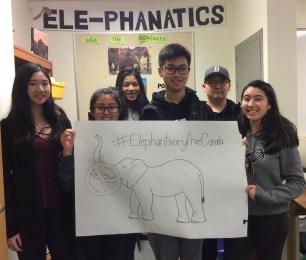
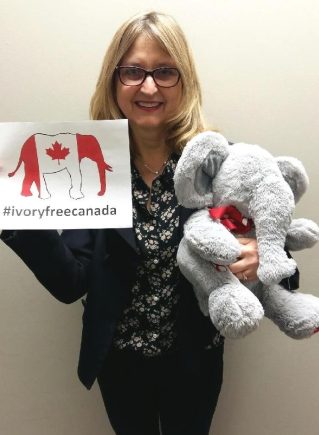
Did you know it is still legal to buy and sell ivory in Canada? Both African and Asian elephants may be extinct in the wild in our lifetime, mainly due to poaching. Elephanatics created the #ivoryfreecanada campaign to help keep our elephants alive. We wrote a letter to the Canadian government, requesting a ban on all domestic trade of elephant ivory. Over 80 Canadian and international scientists, politicians and animal organisations have co-signed the letter!

Now We Need Your Help!

  1. Download the #ivoryfreecanada mini-poster or create your own with the same hashtag. Take a photo of you holding it and post it on social media with the handles: #ivoryfreecanada and @elephanaticsbc. Challenge your friends to do the same to save elephants.
  2. Email your photo to elephanaticsinfo@gmail.com and we will add it to this page.
  3. Sign the petition that will also go to the government. We need as many signatures as possible (Canadian or international citizens) before March 14, 2018. Share it on facebook and twitter.
  4. Tell your friends and family about the elephant crisis and how a domestic ban on elephant ivory trade would help.


In the last century, the Asian elephant population has declined by over 50% and African elephants have plummeted by 97%. Poaching for ivory threatens the very survival of our elephants. The two largest consumers of ivory – China and the United States – have banned domestic ivory sales. So why not Canada?

Leave a comment

Filed under Animal Activism, Sustainability

Tessa’s GoFundMe Polar Elephant Swim

Hey everyone,

On New Year’s Day at 2:30 pm I’m taking a dive into the freezing cold waters of English Bay, (Vancouver, BC) lemon drop martini in hand, and wearing a crazy elephant costume to raise money for the rescue of a working elephant in Thailand. I’m going to get cold, (oh yes I am), apparently I might float away, body parts might separate themselves from me and most likely I will be hungover because the night before is New Years Eve, so ya there’s that. It’s going to be messy and I’m going to freeze my bum off but we’re going to have some fun. My friend Leanne will be joining me.

If you’re in Vancouver, please come down and maybe we’ll sing a song and have a sip of the lemon drop and then you can scream and yell in anticipation as I run toward the gentle ocean waves!

If you love elephants as I do and want to be a part of this rescue effort, please consider donating to a great cause.  Small amounts welcome. Larger amounts welcome too!

Thanks so much!

25687764_1511806036.7764.jpg25665272_1511738042.8701.jpg

Leave a comment

Filed under Animal Activism, elephants, Uncategorized

Canada Must Do More to Stop the Trophy Hunting of Elephants — elephanatics

There was a strong world-wide reaction when President Trump threatened to reverse a 2014 ban on importing elephant trophies from Zimbabwe and Zambia. Few Canadians realized, however, that Canada never had such a ban in place to begin with. Recently a reporter approached Elephanatics President Fran Duthie regarding an Elephantatics petition to the Canadian government […]

via Canada Must Do More to Stop the Trophy Hunting of Elephants — elephanatics

Leave a comment

Filed under Animal Activism, elephants

Canada and the Ivory Trade

18740577_1072989726136102_2316090302732301209_n-1

Many people, understandably, don’t get the connection between global markets and the killing of elephants for their tusks. But with poaching continuing to present the gravest threat to their very existence  (one every fifteen minutes is killed |70% total decline in population in less than 40 years due to poaching, and only 415,000 remaining), the International Union for the Conservation of Nature has called for all countries to close their domestic markets.

Canadians are often surprised to learn that the Canadian domestic “legal” ivory trade is still open. The legal trade is one in which the product is dated prior to 1975. The issue with the legal trade is that it is difficult to date ivory and as a result illegal ivory flows through legal domestic markets.

Canada also allows the importation of legal trophies. Under its obligation to CITES (The Convention on the International Trade on Endangered Species of Wild Flora and Fauna) those trophies can only come from countries regulated by CITES, and thus it is legal under those circumstances.

Below are the instances in which ivory can enter the country:

In order to legally possess ivory in Canada, the following criteria must be met, in accordance to the Wild Animal and Plant Trade Regulations (13 (1)):

http://laws-lois.justice.gc.ca/eng/regulations/SOR-96-263/page-2.html#docCont

    (a) the person who possesses it establishes a reasonable probability that it or, in the case of a part or derivative, the animal or plant from which it comes, was taken from its habitat before July 3, 1975;

    (b) the person who possesses it establishes a reasonable probability that it was legally imported into Canada; or

    (c) the person who possesses it establishes a reasonable probability that the distributing of it or the offering to distribute it would be in accordance with any applicable federal and provincial laws that relate to the conservation and protection of the animal or plant.

 However, these criteria are not applicable to elephant ivory from appendix II. Appendix II ivory is only required to be legally imported into Canada.

 Appendix I items must have import and export permits, while appendix II items are only required to have export permits.

Canada’s position on ivory at international conferences:

  • IUCN World Conservation Congress in Hawaii  in 2016 results in an international commitment to close domestic ivory markets. Four countries object – Canada, Namibia, South Africa & Japan
  • At the 17th Meeting of the Conference of the Parties to CITES, Canada voted against moving all African elephants to Appendix I to provide them the highest level of protection.

In recent years there has been some movement from large ivory markets such as the US and China to close their domestic markets which has the potential to have a significant impact on decreasing the ivory trade and giving  elephants the chance to survive the war being waged on their existence.

  • 2015     China and US announce an agreement to a “nearly complete ban” on ivory import/export and commercial domestic ivory trade7 in both countries (no completion date given).
  • 2016     January: Hong Kong pledges to a complete ban on commercial domestic ivory trade by 2021.
  • June: US passes new regulations that ban almost all domestic ivory trade. August: IUCN World Conservation Congress in Hawaii results in international commitment to close domestic ivory markets. Four countries object – Canada, Namibia, South Africa & Japan.
  • October: CITES conference in Johannesburg fails to put all elephant populations in Appendix I by only 9 votes – Canada, US, UK & EU vote against it. However, Botswana, with the most elephants, reverses their pro-ivory trade policy and supports a total ban.
  • 2017      January: Price of raw ivory in China falls to US$730 per kilogram (65% drop in less 3 years) due to Chinese economic slowdown, anti-poaching team success and crackdown on corruption.
  • February: Draft EU guidance document indicates possible ban on raw ivory exports by July 1, to make sure that illegal tusks are not laundered with legal tusks.
  • March: China closes the first of its 67 licensed ivory carving factories and retailers, and promises to close its domestic ivory market by end of 2017.
  •  March: Hong Kong says a bill on ivory trade will be introduced by end June. Hong Kong also convicts 2 people for illegal ivory possession, using radiocarbon dating to prove post-1990 ban.

It would be great to see Canada take pro-active steps to save one of the world’s most iconic, intelligent, keystone species by closing the domestic trade, banning the importation of trophies into Canada and vote to have all elephants moved to Appendix 1 of the CITES convention. I want Canada to be the country who does everything it can to save these magnificent animals from extinction  not only because it can but because it should.

2 Comments

Filed under Animal Activism, elephants, Sustainability

Global Walk for Elephants – Vancouver 2017

18740577_1072989726136102_2316090302732301209_n-1

Hi everyone and especially Vancouverites,

Elephanatics is once again hosting the Global March for Elephants and Rhinos on September 30th | 12:00 pm to 1:30 pm at Creekside Park |1455 Quebec Street | Vancouver. Find out more about the details of the event here.

Every 15 minutes an elephant is killed for its ivory. Every 8 hours a rhino is poached for its horn. Conservationists estimate that elephants will be extinct in the wild within 10 to 20 years. Several species of rhino have already become extinct. Closing loopholes in global markets and decreasing demand for ivory and rhino horn is essential if these species are to survive.

Advocacy

The focus for this year’s event is on advocacy. Many people ask what Canadians have to do with African elephants. Well, it turns out quite a bit.

Canada was one of only four countries that voted against all countries closing their domestic ivory trade during the 2016 IUCN World Conservation Congress. At the 17th Meeting of the Conference of the Parties to CITES, Canada voted against moving all African elephants to Appendix I to provide them the highest level of protection. In recent years, Canada has been the sole country to issue blanket reservations on all new CITES listings, and has failed to lift those reservations in a timely manner. These inexplicable positions put the Canadian government at odds with a growing international movement to save the African elephant from extinction.

Find out how you can become involved in saving one of the world’s most iconic, essential and beautiful species

While we take what we do seriously we also like to have some fun so there will be face-painting, music, cool people who like to make a difference and some awesome t-shirts for sale to help raise money for frontline conservation work in Africa.

T-shirts for this year’s march.

unnamed

Poster for this year’s event Please share!

GMFER 2017

Hope to see you there!


Leave a comment

Filed under Animal Activism, Uncategorized

Elephant Haven, Kanchanburi, Thailand

Ethical eco-tourism is on the rise in Thailand in large thanks to Lek Chailert, founder of Save the Elephant Foundation and Elephant Nature Park in Chiangmai. Many tourists unknowingly choose elephant riding to fill their Thailand tour itinerary. Most (possibly all) these tourists likely don’t know the story behind how elephants come to be ridden […]

via Elephant Haven – Kanchanaburi, Thailand — elephanatics

Leave a comment

Filed under Animal Activism

Do I Really Want a Dog? Things to Consider Before Taking the Plunge

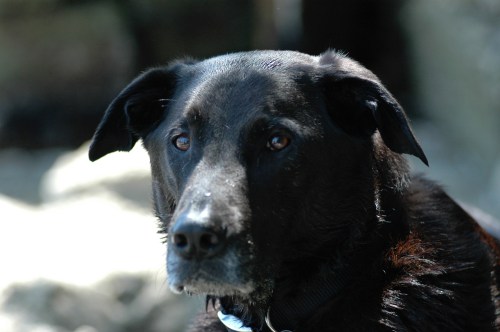
dsc_1384Years ago I adopted a dog on the fly. I went with a friend who was adopting a dog at a ‘farm’ and in a moment of irrational craziness I came home with the sibling of the dog my friend adopted. They were named Reuben and Loo-is before we even left the barn.

I had never been a parent to a dog and I had no idea what I was doing. Neither had I given any thought to where I was living (a studio apartment with no dogs allowed) or how I would cope (I was single at the time and working full time with an energetic sporting schedule). Everything felt poised for disaster and in the intervening days I felt something close to panic.

I have always been a believer in jumping off cliffs…taking big leaps and seeing where I land. In this case, however, I had a puppy in tow and for the first time I felt the burden of real responsibility. Reuben would look up at me with these beautiful dark eyes and from the get go would follow me around no matter where I went…a habit he kept for the 11 years he was with me.

It would be an understatement to say he changed my life. I ended up changing everything about my life in order to give him a life I thought he deserved…even though I wasn’t even sure what that was yet.

It turns out I really love animals and slowly but surely I figured out what I needed to do. But there was a steep learning curve along the way. So here are a few things to think about for anyone thinking of bringing a dog into their life:

  • Breed – I had no idea what kind of breed Reuben was. It turns out he was a black lab something…the something part made him gigantic possessed with an old soul. It turns out that was perfect for me. What wouldn’t have been perfect would have been a super aggressive dog, or a dog that would be dominant over me. In retrospect, doing some research over the type of dog that best suits your personality or family needs is an important thing to consider.
  • Lodging – As mentioned I adopted Reuben when I lived in a studio apartment. In the eleven years we had him he lived in a house that had a backyard, as well as in a condo. Some people say you can’t have a dog in a condo which I disagree with. You can have a big dog or any kind of dog in a condo. The key is exercise.  Wherever you live, in a house or a condo, your dog needs to be walked. Once in the morning, again in the afternoon and again in the evening. Most dogs need a good hour (or more) of exercise a day. If you can’t commit to this, then don’t get a dog. Owning a house is not a good excuse for never taking your dog out.  Most dogs won’t walk themselves in the back yard.
  •  Backyard dogs – People who get dogs who only want to keep them in the yard shouldn’t bother getting a dog.  If you have a yard where you can let your dog rip around for a bit every day that’s great. A yard is not a home.  A porch is not a home. A dog is a social, loving animal who wants to be a part of the family. They need to be walked and loved. That means having them be a full fledged member of the family inside the home.
  • Exercise – I mentioned this above but it bears mentioning again. Dogs, all dogs, big and small, need exercise. They need to be exercised every day, outside their yard. My guess is that a lot of behaviour issues could be solved by fulfilling this basic need. This means giving them exercise, every day rain or shine. Just going on shine days doesn’t work. You have to ask yourself if you’re the type of person willing to do this. If for whatever reason you can’t do this, there is a dog walker and they provide an essential service.  When I got Reuben I was armed with two big problems. One I was hugely fearful of all other dogs, and two I worked full time and needed to get him walked.  I dug into my entertainment budget, the one where I used to go out for dinner and drink vast quantities of wine and I re-directed it to his walking fund. It helped socialize him and he was given a much needed break during the day and I lost weight. Yes, dog walkers are expensive but it’s worth it.
  • Training your dog –  As mentioned Reub came into the world an old soul and really didn’t require a huge amount of training. He didn’t bark if I left him alone, he followed me everywhere so he always came when called, I could walk him off-leash due to his following me everywhere…so I had it easy and I admit that. He was an ABNORMAL puppy. But I have seen a lot of dogs who are a bit wilder or simply need to be trained to be good canine citizens. You want your dog to get along with other animals and to be reliable with people and to be manageable in all situations. It’s good for you and its imperative for them. This means spending time in the first year training your dog.  If you don’t have the time to spend doing this then I would think twice about getting a dog. So many animals end up in the shelter or being re-homed because they can’t be managed and the responsibility for this failure belongs entirely  to the dog parent.
  • Dogs are forever –Dogs are highly emotional, intelligent and loving sentient beings. They form strong attachments to people and families. Giving them up because you’re moving, you had children and now it’s too much, or worse they’re too old, isn’t good enough.  You need to see this through and that means a 10 to 15 year investment. Can you commit for that amount of time?
  • Families and Dogs – We had two sets of neighbours. Each was a young couple. Couple one had a dog before children…and then the children came along. This couple spent time training their dog before they had children and then spent time socializing their dog with their children. Every day you saw them out walking their dog with their kids. It worked. Couple two had a dog who I used to walk. I walked the dog because they never walked the dog. When they had children things went from bad to worse because now they didn’t have time for the dog, which they barely had before they had kids. Then guess what?  They couldn’t take the time to train their kids how to be with the dog and vice versa. Before long the dog was confined to a small space within the condo where I could hear her barking all day long. That’s when I started walking her every day (while my dog went with a dog walker). This is an example of a dog being given a good shift sideways by the family.
  • Cost – I found out quickly that dogs are expensive. My pup was sick from the get go and I spent the first year at the vet with ongoing problems throughout his life. Get insurance, it helps. Food adds up. I don’t like to cheap out so we buy good food and cook half of all of his (now her) meals. Shots, vets, food,….all these things cost money. Do you have the budget or can you make room in your budget for a canine family member?
  • Emotions: Dogs are emotional. Like people they come wired in different ways. Unlike people dogs are dogs and sometimes their behaviour means something different than you think.  What is universal is that dogs want and need to belong. They need to be loved, cared for, they need consistency and most of all they need people to follow through with their commitment to giving them a meaningful and safe life.
  • Sticks – Don’t ever let them eat sticks. We let Reuben do it and it almost killed him when he was five. We also spent close to a downpayment on a house to keep him alive. Seriously, if you can’t eat something, your dog shouldn’t be eating it either.
  •  Dogs don’t lie. Dogs don’t lie. If they’re behaving oddly them more than likely something is going on. They’re in pain, something hurts, or something happened. Take it seriously and go to the vet.

Dogs are work. They are a commitment.But the effort, the time and money spent are all well worth it. You won’t ever have the kind of unconditional love that this beautiful animal has to offer.


Leave a comment

Filed under Animal Activism, Random Musing, Uncategorized